Unlocking Minds: The Transformative Power of Toys That Build Problem Solving
Word Count: ~1,250 words
—
Introduction: Why Problem-Solving Matters from the Playroom Up
From the moment a child picks up a wooden block and tries to balance it on top of another, they are engaging in one of the most fundamental cognitive processes: problem solving. Problem solving is not merely a school subject or a workplace skill—it is the engine of adaptation, creativity, and resilience. In a world increasingly defined by complex, unpredictable challenges, the ability to analyze a situation, generate hypotheses, test solutions, and learn from failure is more valuable than ever.
Toys, often dismissed as mere pastimes, are in fact powerful pedagogical tools. The right toys do not merely entertain; they scaffold the very neural pathways that underpin logical reasoning, spatial intelligence, and strategic thinking. This article explores the diverse universe of toys that intentionally or inherently build problem-solving abilities, examining how they work, why they matter, and what research tells us about their impact on child development.
—
The Cognitive Foundations of Problem Solving in Play
Before diving into specific toys, it is essential to understand what problem solving entails from a developmental perspective. Psychologists typically break it down into several stages: identifying the problem, defining the goal, devising a strategy, executing the plan, evaluating the outcome, and adjusting if necessary. Toys that cultivate these stages do so by presenting open-ended challenges—situations with multiple possible solutions rather than a single, predetermined answer.
According to Jean Piaget’s theory of cognitive development, children construct knowledge through interaction with their environment. Constructive play, where children manipulate objects to create something new, directly activates sensorimotor and preoperational schemas. Later, during the concrete operational stage (ages 7–11), toys that require logical sequencing and systematic testing become especially potent. Vygotsky’s concept of the zone of proximal development further reminds us that toys can serve as a scaffold—a bridge between what a child can do alone and what they can achieve with guidance or with the tool itself.
Modern neuroscience adds that problem-solving toys stimulate the prefrontal cortex, the brain region responsible for executive functions like planning, inhibition, and cognitive flexibility. When a child struggles to fit a oddly shaped piece into a puzzle, their brain is literally forging new connections between perception, motor control, and working memory.
—
Construction and Building Toys: The Foundational Problem Solvers
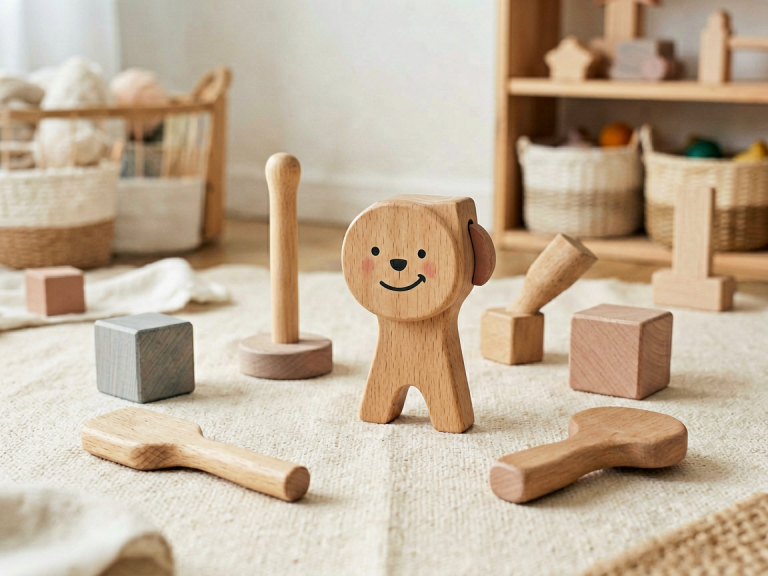
The most iconic category of toys that build problem solving is construction and building sets. From classic wooden blocks to LEGO bricks, magnetic tiles, and more advanced systems like K’NEX or Meccano, these toys are laboratories for engineering thinking.
How they work:
Children must decide what to build, then iteratively solve structural problems. How can I make this tower stable? How do I create a bridge that spans this gap? What happens if I place a heavy block on top of a thin column? Each question requires hypothesizing, testing, and revising. Unlike passive entertainment, building toys provide immediate, concrete feedback: the structure either stands or collapses, the wheel turns or it doesn’t.
Developmental benefits:
Research published in the journal *Early Childhood Research Quarterly* found that preschoolers who engaged in guided block play showed significant improvement in spatial reasoning and early math skills. Spatial reasoning itself is a strong predictor of later STEM achievement. Moreover, because construction is open-ended, children learn that there are multiple correct answers. This fosters divergent thinking—the ability to generate many solutions to a single problem—which is the bedrock of creativity.
Notable examples:
- LEGO Classic Bricks – The simplest sets encourage free building; more advanced sets (e.g., LEGO Technic) introduce gears, axles, and mechanical principles.
- Magna-Tiles – Translucent magnetic shapes that snap together, teaching geometry, symmetry, and magnetism through trial and error.
- Straws and Connectors – Lightweight systems that let children build large, flexible structures and learn about tension and compression.
—
Puzzles and Logic Games: Sequencing & Pattern Recognition
Puzzles are perhaps the most direct example of a problem-solving toy. Whether jigsaw puzzles, tangrams, Rubik’s cubes, or logic grid puzzles, they demand that children systematically evaluate possibilities and eliminate incorrect moves.
How they work:
Jigsaw puzzles require the solver to analyze pieces by shape, color, and pattern, then hypothesize where each piece fits. The process of “edge-sorting” or “color-grouping” is essentially a strategy. Rubik’s cube-style puzzles push this further: each move alters the state of the cube, so the child must think multiple steps ahead, developing working memory and sequential reasoning.
Developmental benefits:
A study in *Frontiers in Psychology* highlighted that regular puzzle play in early childhood is associated with better performance on tasks measuring mental rotation and visual-spatial working memory. These skills are directly linked to success in mathematics, engineering, and even surgical fields. Furthermore, puzzles teach persistence—a crucial sub-skill of problem solving. When a puzzle is difficult, the child learns that frustration is not a signal to quit but a cue to try a different approach.
Notable examples:
- Ravensburger Jigsaw Puzzles – High-quality, progressively more complex images that challenge pattern matching.
- ThinkFun Gravity Maze – A marble-run logic game where players arrange towers to create a path, combining spatial reasoning with logic rules.
- SmartGames Logic Puzzles – Portable, single-player puzzles that involve moving pieces to match a target configuration, with increasing difficulty levels.
—
Board Games: Social Problem Solving & Strategic Thinking
Board games are often overlooked in conversations about problem-solving toys, yet they are uniquely powerful because they combine cognitive challenges with social dynamics. Games like chess, Settlers of Catan, Ticket to Ride, or even cooperative games like Pandemic require players to solve problems under constraints of time, resources, and competition.
How they work:
In a game like chess, every move is a decision with consequences. The player must evaluate the current board state, anticipate the opponent’s likely response, and consider multiple branching possibilities. This is essentially game tree analysis, a classic problem-solving technique. Cooperative games add a layer of communication: players must share information, negotiate strategies, and combine individual strengths to achieve a common goal.
Developmental benefits:
Playing strategy board games has been shown to improve executive functions, particularly inhibition (resisting a tempting but poor move) and cognitive flexibility (switching strategies when the first plan fails). A 2017 meta-analysis in *Educational Psychology Review* found that board game interventions significantly enhanced children’s mathematical abilities and reasoning skills. Moreover, board games teach the value of deliberate practice: losing a game becomes an opportunity to analyze what went wrong and improve for the next round.
Notable examples:
- Blokus – A spatial strategy game where players must place pieces while blocking opponents, requiring forward-thinking and geometric reasoning.
- Qwirkle – A tile-based game that combines color and shape matching with strategic placement, building pattern recognition and planning.
- Pandemic (cooperative) – Players work together to stop disease outbreaks, sharing information and optimizing limited actions—a rich, real-world problem-solving simulation.
—
Coding and Robotics Toys: Computational Problem Solving
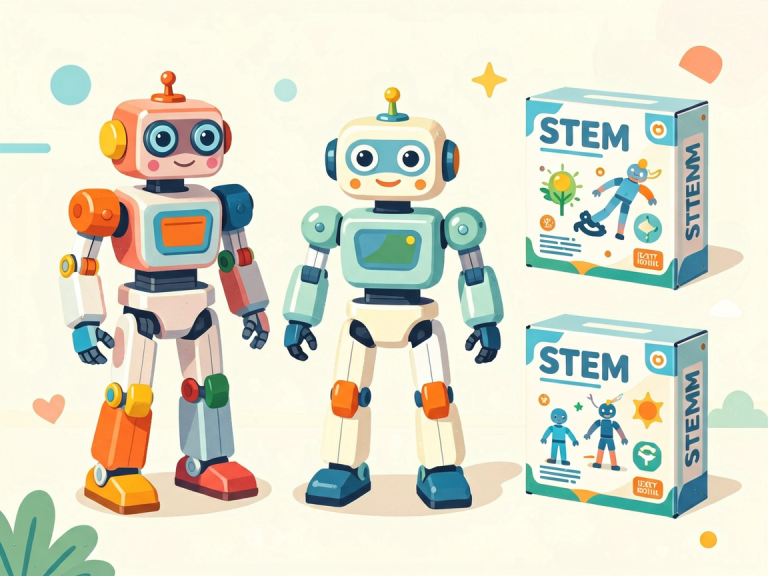
In the digital age, a new class of toys has emerged that explicitly teaches computational thinking—the process of formulating problems in a way that a computer can solve them. These include programmable robots, coding board games, and app-connected building kits.
How they work:
Toys like the Bee-Bot or Sphero require children to break a task (e.g., “move the robot to the red square”) into a sequence of step-by-step commands. This is the essence of algorithmic thinking. More advanced kits, such as LEGO Spike Prime, combine motors, sensors, and a drag-and-drop coding interface. Children must identify the problem (e.g., “make the robot follow a black line”), design a solution (e.g., “use the color sensor to detect the line and adjust motor speed”), then test and debug.
Developmental benefits:
A landmark study by the University of Chicago found that even young children who used programmable robots showed improvements in metacognition—the ability to think about their own thinking. Debugging, in particular, teaches a growth mindset: errors are not failures but clues. Furthermore, coding toys naturally integrate math concepts (angles, distance, variables) and logical operators (if-then, loops) in a tangible, motivating context.
Notable examples:
- Bee-Bot – A simple, floor-friendly robot that young children program with directional buttons—perfect for pre-readers.
- Sphero BOLT – An interactive robotic ball that can be programmed via a tablet, featuring a programmable LED matrix and sensors.
- Osmo Coding – A hybrid system that uses physical blocks to control an on-screen character, bridging the tactile and digital worlds.
—
Art and Creative Construction: Divergent Problem Solving
Not all problem solving is logical or sequential. Many real-world challenges require creative problem solving—thinking outside the box, combining unrelated ideas, or redefining the problem itself. Toys that encourage artistic expression—such as modeling clay, 3D pens, or open-ended art supplies—are often underestimated as problem-solving tools.
How they work:
When a child uses modeling clay to sculpt a dinosaur, they must solve engineering problems (how to make the tail stay attached), aesthetic problems (what proportions look realistic), and narrative problems (what story the sculpture tells). There is no single “correct” outcome. The child must weigh trade-offs, experiment with materials, and tolerate ambiguity.
Developmental benefits:
Art-based toys develop divergent thinking and cognitive flexibility. A study in *Thinking Skills and Creativity* showed that children who engaged in open-ended artistic play scored higher on the Torrance Tests of Creative Thinking, which measure fluency, originality, and elaboration. Moreover, the iterative process of creating, evaluating, and revising a piece of art mirrors the problem-solving cycle in a uniquely personal way.
Notable examples:
- Play-Doh – Simple but endlessly modifiable; children learn cause and effect (adding water makes it sticky) and structural problem solving.
- 3Doodler 3D Pen – A pen that extrudes heated plastic, allowing children to “draw” three-dimensional objects, combining spatial planning with artistic freedom.
- Kinetic Sand – Malleable sand that holds shapes; children can build sandcastles that collapse, then problem-solve to improve stability.
—
The Role of Adult Guidance: Maximizing the Impact
While toys themselves are catalysts, the presence of an engaged adult can amplify their problem-solving potential. Vygotsky emphasized that learning occurs through scaffolding—the adult’s ability to ask probing questions (“Why do you think that piece falls off?”) or to model thinking aloud (“I wonder if we could try turning it sideways”). Parents and educators should avoid jumping in with the answer; instead, they can foster a “safe fail” environment where mistakes are celebrated as learning steps.
Research from the Center on the Developing Child at Harvard University underscores that “serve and return” interactions—where an adult responds to a child’s curiosity with supportive conversation—are critical for building the brain architecture of problem solving. Simply providing a toy is not enough; the quality of interaction matters.
—
Conclusion: From Playroom to Real World
The toys we choose for children are not trivial purchases—they are investments in cognitive architecture. Whether a child is stacking wooden blocks, solving a logic puzzle, coding a robot, or sculpting a clay monster, they are practicing the same fundamental skill: problem solving. They learn to frame questions, test hypotheses, tolerate failure, and persist until a solution emerges. These skills do not stay in the playroom; they travel with the child into math class, into group projects, into their first jobs, and into the unpredictable landscape of adult life.
As parents, educators, and toy designers, we have a responsibility to put down the passive screens and pick up the tools that challenge—the puzzles that stump, the blocks that tumble, the games that demand strategy. In doing so, we do not just give children entertainment; we give them the confidence to face any problem the world throws their way.