The Best Toy Path for Creativity: Unlocking Imagination Through Purposeful Play
—
Introduction
In a world saturated with flashing lights, pre-programmed responses, and digital distractions, the quest for the “best toy path for creativity” has never been more urgent—or more misunderstood. Parents, educators, and caregivers are often seduced by marketing claims that promise to turn children into little geniuses. Yet the true path to creativity is not paved with the most expensive or technologically advanced gadgets. Instead, it winds through a carefully chosen sequence of toys that evolve with a child’s developing mind, each one offering a unique invitation to imagine, experiment, and create. This article explores what that path looks like, why it works, and how you can design it for the children in your life.
The best toy path for creativity is not a single toy but a journey—a curated series of playthings that encourage open-ended exploration, problem-solving, and self-expression. It prioritizes process over product, questions over answers, and the joy of discovery over the satisfaction of completion. By understanding the stages of cognitive and creative development, we can select toys that act as catalysts rather than crutches, nurturing a lifelong capacity for original thought.
—
The Philosophy of the Toy Path
Before diving into specific toys, it is essential to understand the underlying philosophy. Creativity is not a fixed trait that some children have and others lack; it is a muscle that must be exercised. The right toys provide the gym. But not all exercise is equal. A toy that dictates a single outcome—like a battery-operated robot that only moves in one way—trains compliance, not creativity. In contrast, toys that offer infinite possibilities—such as blocks, clay, or loose parts—train flexibility, divergent thinking, and resilience.
The best toy path for creativity follows three principles:
- Open-endedness: The toy should have no single “right” way to play. It should invite the child to invent their own uses, rules, and stories.
- Progressive complexity: As the child grows, the toy should offer new challenges without overwhelming them. A set of simple wooden blocks can later become part of a marble run or a geometry lesson.
- Sensory richness: Toys that engage multiple senses—texture, sound, weight, smell—ground creativity in physical reality, which is crucial for developing abstract thinking later.
This path is not a rigid prescription but a flexible guide. Every child is unique, and the journey may vary. However, research in developmental psychology and neuroscience consistently points to a few archetypal categories of toys that form the backbone of a creative childhood.
—
Stage 1: The Foundational Years (Ages 0–3) – Building the Sensory and Motor Base
In the earliest years, creativity begins with the body. Infants and toddlers learn about the world through touch, taste, sight, sound, and movement. The best toys at this stage are those that allow for safe, repetitive, and exploratory play.
Loose Parts and Sensory Materials
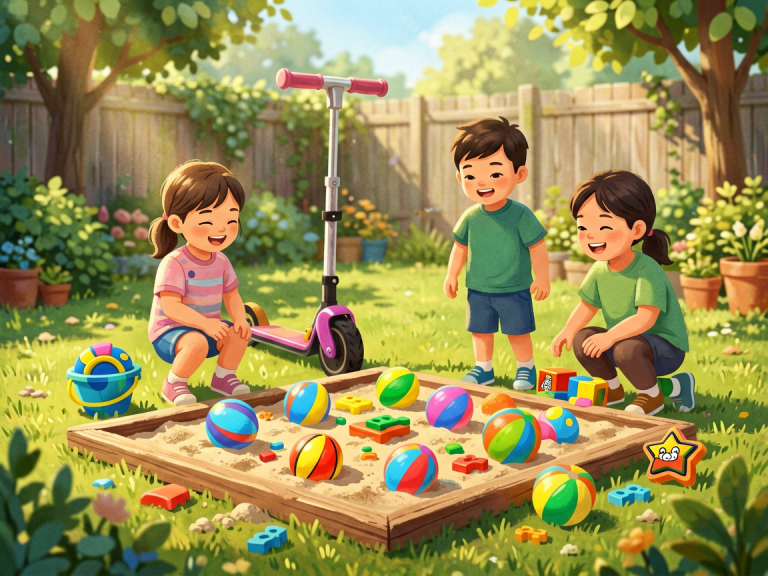
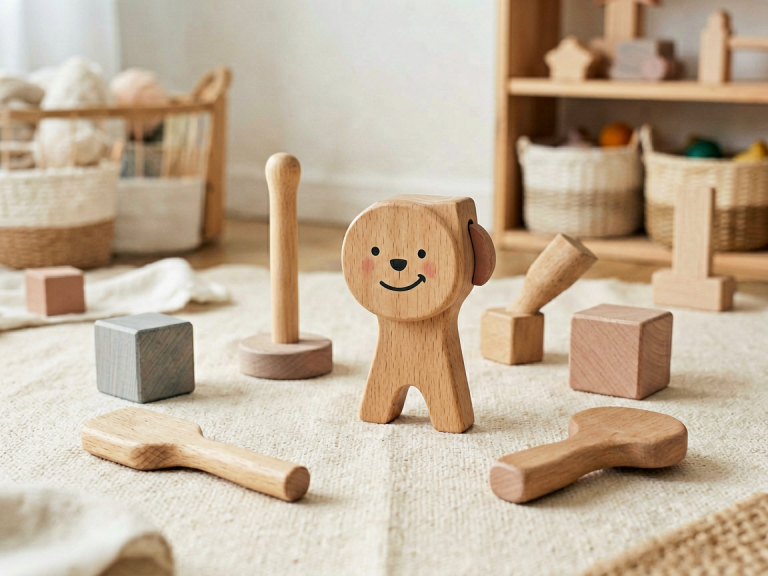
Think of simple wooden rings, fabric squares, stacking cups, and soft balls. These are not just “baby toys”; they are the first tools for causal reasoning and imaginative transformation. A wooden block can become a car, a phone, or a piece of cake. The child’s brain is wiring itself to see potential where others see only an object. Sensory bins filled with rice, sand, or water (with supervision) offer endless opportunities for pouring, scooping, and mixing—the precursor to scientific experimentation.
Open-Ended Manipulatives
Interlocking plastic rings, large Duplo bricks, and simple shape sorters (with multiple possible shapes) teach cause and effect while leaving room for non-standard configurations. At this age, creativity is often messy and accidental. The goal is not a finished product but the process of discovery. A toddler who stacks three blocks and then knocks them down is learning about gravity, balance, and the thrill of destruction—which is, paradoxically, a form of creation.
The key is to resist the urge to “correct” or “improve” the child’s play. When a child uses a spoon as a drumstick, celebrate the ingenuity rather than redirecting them to its intended use. This stage lays the neural foundation for later creative leaps.
—
Stage 2: The Expanding Mind (Ages 3–7) – Narrative, Construction, and Symbolism
As language blossoms and social play emerges, children enter a golden age of imagination. They begin to create stories, assign roles, and build worlds. The best toy path for creativity at this stage emphasizes construction, symbolic representation, and collaborative play.
Building Sets and Construction Toys
Classic wooden unit blocks are arguably the single most important toy for creative development. They are mathematically precise yet infinitely variable. A child can build a tower, a castle, a spaceship, or a simple fence. They learn geometry, engineering, and aesthetics through trial and error. Magnetic tiles (like Magna-Tiles) add a modern twist, allowing for translucent, brightly colored structures that can be reconfigured instantly. These toys teach spatial reasoning and the joy of iterative design.
Art Materials and Loose Parts
Crayons, washable markers, child-safe scissors, glue, and a constant supply of recycled materials (cardboard boxes, bottle caps, fabric scraps) are essential. At this stage, the emphasis should be on process art—no coloring books, no stencils, no instructions. A child who draws a purple sun with three eyes is not making a mistake; they are expressing a unique vision. Provide a “creation station” where they can access materials freely, and resist the temptation to display only “beautiful” work. Every scribble is a step toward fluency in visual language.
Pretend Play Props
Simple costumes, play kitchens, dolls, and animal figures allow children to step into different roles and narratives. Unlike themed playsets that dictate a specific story (e.g., a pirate ship with a fixed crew), open-ended props like a plain scarf or a cardboard box can become anything—a cape, a tent, a treasure chest. This kind of symbolic play is the foundation of abstract thinking and empathy.
At this stage, the adult’s role is to provide rich material and then step back. Ask open-ended questions like “What happens next?” or “How does your character feel?” rather than directing the play. This nurtures the child’s agency and narrative creativity.
—
Stage 3: The Creative Adolescent (Ages 7–12 and Beyond) – Systems, Patterns, and Self-Expression
As children enter middle childhood and adolescence, their creativity becomes more intentional, complex, and self-aware. They begin to understand rules and systems, and they can sustain long-term projects. The best toy path now shifts toward tools that allow for mastery, customization, and integration of multiple domains.
Construction Kits with Real Mechanics
K’Nex, LEGO Technic, or wooden marble runs with gears and pulleys introduce principles of physics and engineering in a playful context. These kits come with instructions but also allow for free building. The creative challenge lies in solving a problem—how to make the marble go from point A to point B, or how to build a working crane—and then inventing new solutions. At this stage, failure becomes a teacher. A structure that collapses is not defeat; it is data.
Digital Creativity Tools (Used Mindfully)
Tablets and computers can be part of the creative path, but only if used as tools for creation, not consumption. Drawing apps like Procreate, animation software like Stop Motion Studio, or music creation apps like GarageBand allow children to produce original work. Coding toys like Sphero or micro:bit introduce logical thinking and the joy of making something come to life. The key is to limit passive screen time and encourage active, project-based engagement.
Advanced Art and Craft Supplies
High-quality paints, modeling clay, wire, fabric, and printmaking materials offer deeper avenues for expression. Adolescents often crave realism and precision, so providing tools like a good set of colored pencils, a simple pottery wheel, or a sewing machine can channel their perfectionism into productive creativity. Encouraging them to design their own board game, write a comic, or build a model of their dream room integrates multiple skills—research, planning, execution, and revision.
At this stage, creativity becomes a form of identity exploration. The best toy path supports this by offering choice, autonomy, and opportunities for mastery. A child who spends weeks perfecting a stop-motion film is learning patience, storytelling, technical skill, and self-critique—all hallmarks of a creative adult.
—
Why These Toys Work: The Science of Creative Play
The toy path described above is not arbitrary; it aligns with established research on creativity. Psychologist Mihaly Csikszentmihalyi’s concept of “flow” describes a state of deep engagement where challenge and skill are perfectly balanced. Open-ended toys naturally induce flow because the child can adjust the difficulty themselves—adding more blocks to make a taller tower, or choosing a more complex story to act out.
Neuroscience shows that the prefrontal cortex, responsible for executive functions like planning, inhibition, and cognitive flexibility, is strengthened by activities that require switching between rules, generating multiple solutions, and tolerating ambiguity. A child playing with loose parts does exactly that: a single object can be redefined moment by moment. This neural flexibility is the biological basis of creativity.
Furthermore, the path avoids the creativity-killing trap of external rewards. When a toy has a single correct outcome, children learn to perform for approval. When the outcome is open, they learn to value their own ideas. Intrinsic motivation, as famously studied by researchers like Edward Deci and Richard Ryan, is the engine of sustained creative achievement. The best toys are those that make the process itself rewarding.
—
Conclusion: Crafting Your Own Creative Toy Path
There is no single “best” toy that will guarantee a creative child. But there is a best *path*—a thoughtful, evolving sequence that respects developmental stages, prioritizes open-endedness, and celebrates the messy, glorious process of making something new. The path begins with textured blocks and sensory bins in infancy, passes through wooden blocks and paint-stained fingers in early childhood, and culminates in sophisticated tools for building, coding, and creating in pre-adolescence and beyond.
The most important element, however, is not the toy but the environment. A child surrounded by judgment, time pressure, or the expectation of perfection will produce only safe, conventional ideas. The same child, given freedom, respect, and a few carefully chosen toys, will invent worlds. So the next time you search for the perfect gift, resist the flashy plastic box with its list of features. Instead, ask: Does this toy invite a question more often than it provides an answer? Does it leave room for the child’s own imagination to fill the gaps? If the answer is yes, you have found a piece of the path.
The best toy path for creativity is not a destination. It is a lifelong conversation between the child and the world—a conversation that begins with a single block, a crayon, or a cardboard box, and grows into a symphony of original thought. And that, ultimately, is the greatest gift we can give.