Learning Through Play: A Comprehensive Guide to Using Toys for Educational Development
Introduction
In an era where screen time often dominates children’s daily routines, the humble toy remains one of the most powerful tools for cognitive, social, and emotional growth. The concept of “learning through play” is not merely a trendy educational buzzword; it is a well-researched approach that leverages children’s natural curiosity and joy to build foundational skills. Toys, when chosen and used intentionally, can transform playtime into a rich learning experience that rivals any formal lesson. This article explores how to use toys for learning through play, offering detailed strategies for parents, educators, and caregivers. From understanding the science behind play to selecting age-appropriate tools and implementing effective interaction techniques, you will discover that every block, puzzle, and doll has the potential to teach far more than meets the eye.
The Science Behind Play-Based Learning
Why Play Matters for Brain Development
Neuroscientific research has consistently demonstrated that play is essential for healthy brain development. When children engage in play, their brains form and strengthen neural connections at an astonishing rate. Play activates the prefrontal cortex, the area responsible for executive functions such as problem-solving, impulse control, and planning. Moreover, play stimulates the release of dopamine, a neurotransmitter associated with pleasure and motivation, which enhances memory retention and encourages repeated engagement with challenging tasks. Toys serve as the physical catalysts for this process, providing structured yet flexible opportunities for exploration.
Theoretical Foundations: Piaget, Vygotsky, and Montessori
Three prominent educational theorists have shaped our understanding of play-based learning. Jean Piaget emphasized that children construct knowledge through hands-on interaction with their environment. Toys offer concrete examples of abstract concepts—a set of building blocks teaches volume, balance, and geometry without a single lecture. Lev Vygotsky introduced the concept of the “zone of proximal development,” where a child learns best when guided slightly beyond their current ability. A caregiver using a puzzle can ask probing questions that nudge the child toward a solution, turning a toy into a scaffold for learning. Maria Montessori championed self-directed, sensory-rich learning materials that allow children to learn at their own pace. Modern educational toys often draw from these principles by offering clear feedback, opportunities for repetition, and open-ended possibilities.
Choosing the Right Toys for Different Ages
Infants and Toddlers (0–2 Years): Sensory Exploration and Cause-and-Effect
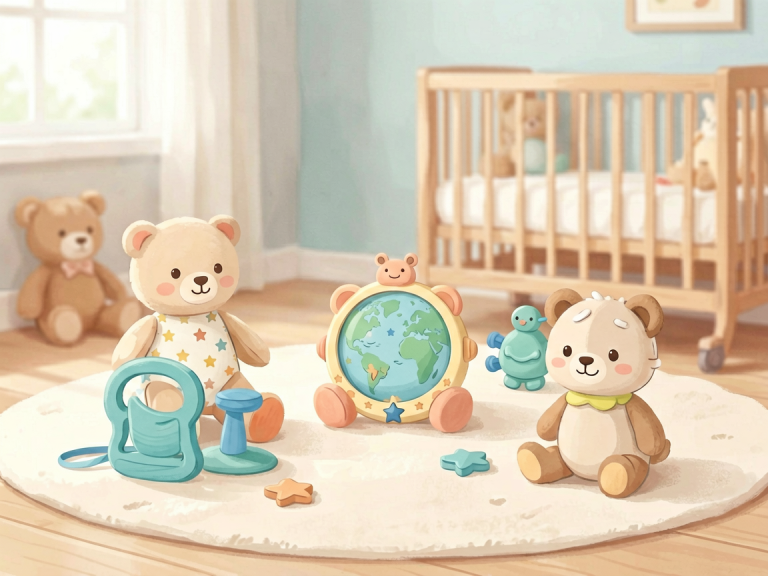
For the youngest learners, toys should stimulate the senses and introduce basic cause-and-effect relationships. Soft rattles, textured balls, and activity gyms with hanging objects encourage grasping, reaching, and visual tracking. Simple stacking cups or shape sorters help develop fine motor skills and early spatial awareness. At this stage, the adult’s role is to narrate the play, labeling colors, shapes, and actions. For example, when a baby drops a toy and it falls, saying “You dropped the block! It goes down!” builds early language and scientific thinking. Avoid overstimulating electronic toys; simple, natural materials often yield deeper engagement.
Preschoolers (3–5 Years): Imagination, Language, and Early Math
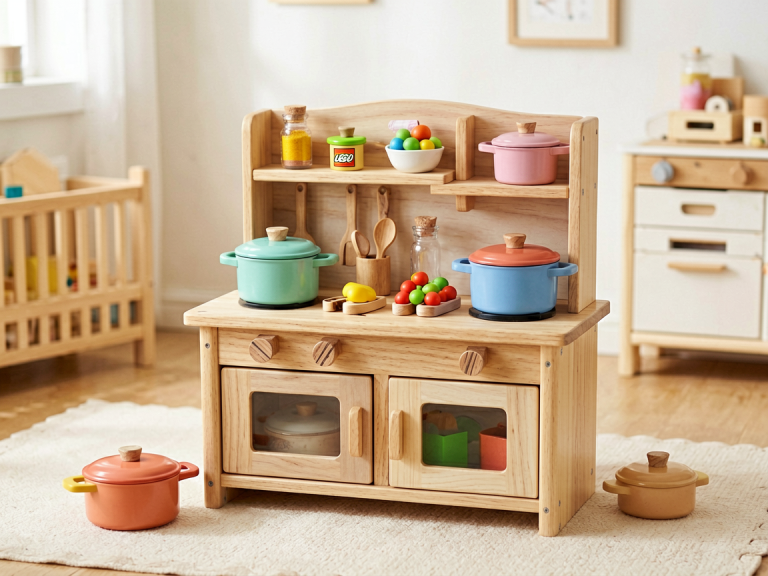
Preschool children thrive on pretend play, which fosters creativity, empathy, and narrative skills. A play kitchen, doctor’s kit, or set of animal figures allows them to role-play real-world scenarios, practicing social scripts and problem-solving. Blocks and construction sets become more sophisticated, enabling children to build towers, bridges, and enclosures that teach balance, symmetry, and basic engineering. Puzzles with 12 to 24 pieces develop pattern recognition and persistence. Simple board games like Candy Land or Snakes and Ladders introduce turn-taking, counting, and dealing with winning or losing. The key is to let the child lead: ask open-ended questions such as “What happens next in your story?” or “How can we make this tower taller without falling?”
School-Age Children (6–11 Years): Logic, STEM, and Collaboration
As children enter formal schooling, toys can reinforce academic concepts while keeping learning joyful. Construction sets like LEGO or magnetic tiles challenge children to follow instructions (reading comprehension) while also allowing free creation (divergent thinking). Science kits for making slime, growing crystals, or building simple circuits introduce the scientific method through trial and error. Strategy board games like chess, checkers, or Settlers of Catan develop logic, planning, and social negotiation. Craft kits that involve sewing, painting, or model-building refine fine motor control and patience. At this stage, children can also engage with coding toys such as Sphero or Botley, which teach sequencing, loops, and debugging through playful robotics.
Adolescents (12+ Years): Complex Systems, Critical Thinking, and Career Exploration
Teenagers benefit from toys that mimic real-world problems and professional tools. Advanced LEGO Technic sets with gears and motors introduce mechanical physics. Programming toys like micro:bit or Raspberry Pi allow teens to create interactive gadgets, blending technology with creativity. Strategy games such as Pandemic or Risk require complex decision-making, resource management, and teamwork. Model-building (airplanes, architecture, electronics) nurtures attention to detail and long-term project management. Even hobbies like knitting or woodworking qualify as “toys” when approached as learning tools; they teach geometry, measurement, and patience. Encourage teens to reflect on what they learn: “What did you try that didn’t work? How did you fix it?” Such questions transform play into metacognitive practice.
Strategies for Maximizing Learning Through Toy Play
Embrace Open-Ended Toys
Open-ended toys—blocks, clay, loose parts, dress-up clothes—offer limitless possibilities and adapt to a child’s developmental level. A set of wooden blocks can become a castle for a toddler, a math lesson for a first-grader (counting, fractions), or a physics experiment for an older child (structural stability). When selecting toys, prioritize those that do not have a single correct outcome. Closed-ended toys, like electronic games with a fixed sequence, can be enjoyable but often limit creativity. Strive for a balance: a puzzle is closed-ended but valuable for specific skills; a bag of assorted buttons and fabric scraps is open-ended and sparks imagination.
Use Guided Questions and Scaffolding
The adult’s interaction during play is crucial. Instead of giving direct instructions, use questions that encourage exploration and problem-solving. For example, while a child plays with a marble run, ask: “What happens if you change the slope of this ramp?” “How can you make the marble go faster?” “Why do you think it stopped here?” This technique, known as scaffolding, helps children move from their current understanding to deeper insight without robbing them of discovery. Praise effort and process rather than outcome: “I love how you tried three different ways before you got it to work!” This builds a growth mindset and resilience.
Integrate Real-World Contexts
Toys become more meaningful when connected to real life. If a child is playing with a toy cash register, talk about making change, pricing items, and the concept of earning money. If they are building with blocks, relate the shapes to buildings they see in the neighborhood. Take a toy truck outside and discuss weight, gravity, and friction as it moves on different surfaces. For older children, use a chemistry set to explore why baking soda and vinegar bubble (linking to cooking or cleaning). By bridging play and reality, you help children see that learning is everywhere—not confined to a classroom.
Encourage Social Play and Collaboration
Many toys gain educational value when used with others. Board games teach turn-taking, empathy (how does it feel to lose?), and communication. Building projects require division of labor and negotiation. Pretend play scenarios invite cooperation: “I’ll be the customer, and you be the chef—what should I order?” For solitary play, still encourage children to narrate their actions or “talk” to their toys. This self-talk enhances language development and self-regulation. When siblings or friends play together, conflicts arise naturally, providing opportunities to practice conflict resolution and emotional regulation—skills that are far more valuable than any specific academic content.
Limit Screen-Based “Toys” and Prioritize Active Engagement
While some digital toys have educational merit (e.g., coding apps, interactive e-books), many passive screen-based activities reduce opportunities for physical manipulation, social interaction, and creative thought. Whenever possible, choose toys that require hands-on action: building, sorting, rolling, drawing, or moving. If a digital toy is used, set clear time limits and engage together. For instance, if using an augmented reality globe, ask your child to find their favorite animal and then look up a real documentary about it. The key is that the toy should be a tool for active learning, not a babysitter.
Practical Tips for Parents and Educators
Observe Before Intervening
Before jumping in with suggestions, spend a few minutes simply watching how a child interacts with a toy. What do they gravitate toward? What frustrates them? What repeated patterns do you notice? Observation reveals a child’s current interests and developmental stage, allowing you to tailor your support. For example, if a child repeatedly builds towers that fall, they may be exploring balance; you can offer larger blocks or suggest a wider base rather than showing them how to build “correctly.”
Create a “Toy Library” with Rotating Selection
A cluttered toy box can overwhelm children and reduce quality play. Instead, keep a manageable number of toys (10–15 items) available at a time, and rotate them every few weeks. This maintains novelty and encourages deeper exploration of each toy. Store toys in low, open bins so children can see and choose independently. Label bins with pictures for pre-readers, promoting organization and responsibility. Include a mix of categories: construction, pretend play, puzzles, art, and movement (e.g., balls, jump ropes).
Set Up Learning Stations for Themed Play
For educators or homeschooling parents, create temporary “play stations” around a theme. A “transportation” station could have toy cars, maps, traffic signs, a ramp, and books about trucks. A “grocery store” station might include play food, a cash register, paper bags, and simple price tags. Children move between stations, engaging in self-directed learning that integrates math, literacy, and social studies. The teacher or parent circulates, asking questions and extending ideas. This approach mimics the richness of a Montessori classroom but can be adapted for home.
Avoid Over-Structuring Play
While this article emphasizes intentional learning, it is equally important to protect free, unstructured playtime. Not every moment with a toy needs a learning objective. Sometimes a child simply wants to line up cars by color or smash a block tower—and that, too, is learning: sorting, cause-and-effect, emotional release. The goal is to create an environment rich with possibilities, then trust the child to follow their own curiosity. Over-coaching can kill the joy that makes play so effective. Strike a balance: provide the tools, model curiosity, and then step back.
Conclusion
Toys are far more than diversions; they are the laboratories of childhood, where hypotheses are tested, relationships are forged, and the foundations of lifelong learning are laid. By understanding how to use toys for learning through play—choosing age-appropriate, open-ended materials; interacting with thoughtful questions; weaving in real-world connections; and balancing guidance with freedom—adults can transform playtime into a rich educational experience that respects children’s natural development. The most important toy is not the object itself, but the engaged adult who plays alongside the child, nurturing wonder and the joy of discovery. So the next time you see a child building with blocks or pretending to be a dinosaur, remember: they are not just playing. They are learning to think, to create, and to understand the world one toy at a time.