From Playground to Programmer: The Complete Journey of Beginner to Advanced Robot Toys
Introduction
The world of robot toys has evolved far beyond the simple wind-up tin soldiers or remote-controlled cars that once defined childhood entertainment. Today, the market offers an astonishing spectrum—from basic interactive companions for toddlers to sophisticated programmable machines that teach college-level engineering concepts. This article explores the continuum from beginner to advanced robot toys, examining their features, educational value, and how they prepare young minds (and curious adults) for a future dominated by automation and artificial intelligence. Whether you are a parent looking for the perfect first robot, a hobbyist seeking a new challenge, or an educator integrating STEM into your classroom, understanding this progression is essential.
—
Beginner Robot Toys: First Encounters with Robotics
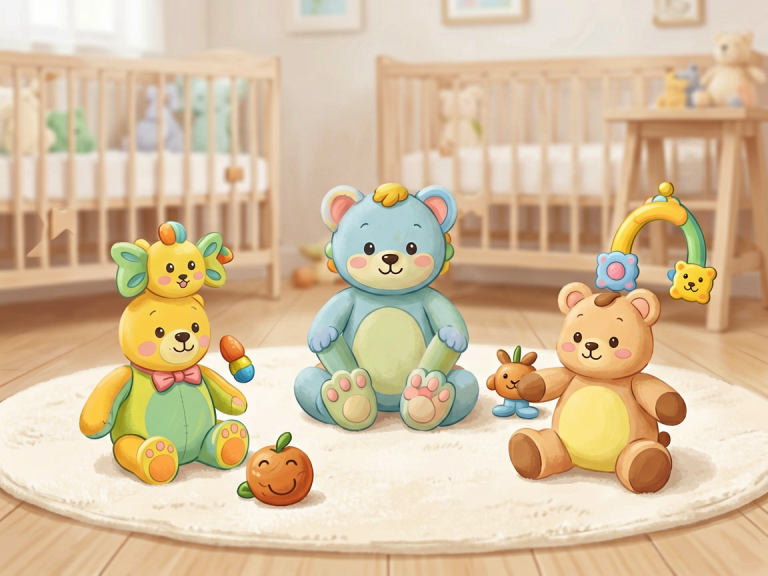
For the youngest explorers—typically ages three to seven—beginner robot toys focus on sensory stimulation, cause-and-effect learning, and emotional engagement without overwhelming complexity. These toys often resemble friendly animals or cartoon characters, using bright colors, soft materials, and simple buttons.
Key Examples and Features
One iconic example is *Fisher-Price’s Code-a-Pillar*, a caterpillar-like robot whose segments can be rearranged to create different paths. Preschoolers learn sequencing and problem-solving as they snap the segments together to make the toy move forward, turn left, or stop. Another popular choice is *Sphero Mini*, a small, app-controlled ball robot that rolls, glows, and responds to tilt gestures. Its simplicity—just push a button or swipe a phone—demands no reading or programming knowledge.
Educational Benefits
At this level, children develop fine motor skills, recognize patterns, and grasp basic logic. For instance, when a child presses a button and the robot dances, they internalize “if I do this, then that happens.” This foundational understanding is the seed of computational thinking. Moreover, beginner robot toys often include storytelling elements: *Cozmo*, by Anki (now discontinued but still widely available), has a personality that reacts with joy or frustration, teaching empathy and social cues.
Parental Guidance
Parents should focus on interactive play rather than instruction. Let the child experiment freely. The goal is not to teach code but to demystify technology—showing that robots can be friends, not just machines. Beginner toys typically cost between $20 and $80 and require no prior knowledge, making them accessible to all families.
—
Intermediate Robot Toys: Building, Sensing, and Simple Programming
As children grow—typically ages eight to twelve—they crave more control and creativity. Intermediate robot toys introduce modular construction, basic sensors, and drag-and-drop coding interfaces. These toys bridge the gap between passive play and active creation.
Construction and Customization
*LEGO Mindstorms Robot Inventor* (or its predecessor, *LEGO Boost*) is the gold standard here. Kids build robots from LEGO bricks, add motors and sensors, then program them using a block-based language similar to Scratch. They can create a walking dinosaur, a robotic arm, or a vehicle that follows a black line. Similarly, *VEX IQ* offers snap-together metal parts and a simple graphical coding environment. The physical construction teaches mechanical principles like gear ratios and torque, while the software introduces loops, conditionals, and variables.
Sensors and Real-World Interaction
Intermediate robots often include ultrasonic distance sensors, color sensors, gyroscopes, and touch sensors. For example, a robot can be programmed to avoid walls, pick up objects, or respond to hand claps. This bridges the gap between abstract code and physical reality. Children learn debugging: why did the robot crash? Because the distance threshold was too high. They iterate, test, and improve—a genuine engineering process.
Educational Impact
At this stage, STEM concepts become tangible. Mathematics appears in angle calculations; physics emerges in friction and momentum. Group projects encourage collaboration and communication. Many schools use these kits in after‑school robotics clubs or competitions like FIRST LEGO League. The cost ranges from $100 to $400, which may seem steep, but these kits are reusable and expandable.
—
Advanced Robot Toys: Real Programming, AI, and Autonomous Systems
For teens and adults—ages thirteen and up—advanced robot toys demand genuine programming skills, often in Python or C++, and may incorporate artificial intelligence, computer vision, and multi‑axis kinematics. These are not mere toys but miniature research platforms.
Microcontroller‑Based Platforms
The *Arduino Robot* or *Raspberry Pi‑based kits* (like the *Pi‑Top* or *Sunfounder Smart Car*) allow users to write code that directly controls motors, reads sensor data, and communicates via Wi‑Fi or Bluetooth. A typical project might involve building a line‑following robot that uses an infrared sensor array and a PID control algorithm to maintain speed and accuracy. More advanced users can implement SLAM (Simultaneous Localization and Mapping) on a small rover, enabling it to navigate an unknown room.
AI and Computer Vision
Cutting‑edge robot toys now incorporate machine learning. For example, *JetBot* from Nvidia is an open‑source AI robot that runs neural networks for object detection and autonomous navigation. Using a Raspberry Pi and a camera, users can train the robot to recognize specific objects (like a green ball) and follow it. *DeepRacer* by Amazon Web Services provides a 1/18th‑scale car that trains reinforcement learning models on cloud servers, then downloads them to run on the physical vehicle. This teaches not only coding but also data collection, model evaluation, and hyperparameter tuning.
Professional‑Grade Kits
Some advanced kits approach industrial robotics. *uArm Swift Pro* is a desktop robotic arm that can perform pick‑and‑place tasks, drawing, or even 3D printing. It uses a parallel gripper or suction cup and can be programmed via Python, C++, or even a visual interface. *Dobot Magician* offers similar capabilities with higher precision, suitable for small‑scale automation experiments. These cost $300 to $1,000, but they provide insight into real‑world robotics used in manufacturing and logistics.
Challenges and Mindset
Advanced robot toys are not for casual tinkerers. They require patience, systematic debugging, and often a willingness to read documentation. A common frustration is that “the robot doesn’t work” even when the code seems correct—only to discover a loose wire or an incompatible library version. This teaches resilience and attention to detail. For students aiming for engineering or computer science careers, these toys are invaluable portfolio builders.
—
Choosing the Right Robot Toy for Your Stage
The transition from beginner to advanced robot toys is not strictly age‑based; it depends on prior experience and interest. A curious 10‑year‑old might skip intermediate kits and dive into Arduino with parental help, while an adult beginner may prefer an intermediate kit with visual programming before tackling code.
Recommendations by Level
- Beginner (Age 3–7): *Code‑a‑Pillar*, *Sphero Mini*, *Cozmo* (if available). Focus: play, causality, emotional bonding.
- Intermediate (Age 8–12): *LEGO Mindstorms*, *VEX IQ*, *Makeblock mBot*. Focus: building, sensors, block coding, teamwork.
- Advanced (Age 13+): *Arduino Robot Kit*, *Raspberry Pi Rover*, *JetBot*, *uArm Swift Pro*. Focus: text‑based coding, AI, integration, real‑world application.
Beyond the Toy: Communities and Resources
No matter the level, robot toys are more powerful when paired with communities. Websites like *Robots.net*, *Instructables*, and *GitHub* offer project guides. Robotics competitions—from FIRST to RoboCup Junior to local hackathons—provide motivation and peer learning. For advanced users, online courses on Coursera or edX can supplement the hands‑on experience with theory.
—
The Future of Robot Toys
As technology accelerates, the boundary between toy and tool continues to blur. We are seeing robot toys that incorporate generative AI, allowing them to converse naturally or adapt their behavior based on user emotions. Haptic feedback and augmented reality are also emerging: imagine programming a virtual robot in AR that then manifests its actions on a physical counterpart.
Moreover, the cost of advanced components—LiDAR sensors, high‑resolution cameras, powerful microcontrollers—is dropping rapidly. What was a $5,000 research robot a decade ago now fits into a $300 kit. This democratization means that any motivated learner can now explore robotics without a university lab.
A Lifelong Journey
Beginning with a simple robot that rolls and beeps, moving to a programmable brick‑built machine, and finally coding an autonomous AI‑powered rover—this is not just a progression of toys; it is a journey of intellectual growth. Robot toys teach us that failure is a step, that curiosity drives innovation, and that the most powerful tool we have is our own brain. Whether you are a child pressing a button for the first time or a adult training a neural network, the essence remains the same: the joy of making something come alive.
—
*(Word count: approximately 1,280 words)*