From Blocks to Bots: A Journey Through Beginner to Advanced Building Toys
Introduction
Building toys have long been a cornerstone of childhood play, but their appeal extends far beyond the nursery. They are tools for creativity, problem-solving, and even early engineering education. From the simplest wooden blocks to sophisticated programmable robotics kits, the spectrum of building toys offers a progressive learning path that can engage a child—or an adult—for years. This article explores the journey from beginner to advanced building toys, examining what defines each level, the skills they develop, and how they can guide a builder from stacking blocks to designing autonomous machines. Whether you are a parent looking for the next challenge for your child, a hobbyist seeking new horizons, or an educator designing a curriculum, understanding this progression is key to choosing the right tools for growth.
Level 1: Beginner – Foundations of Creativity
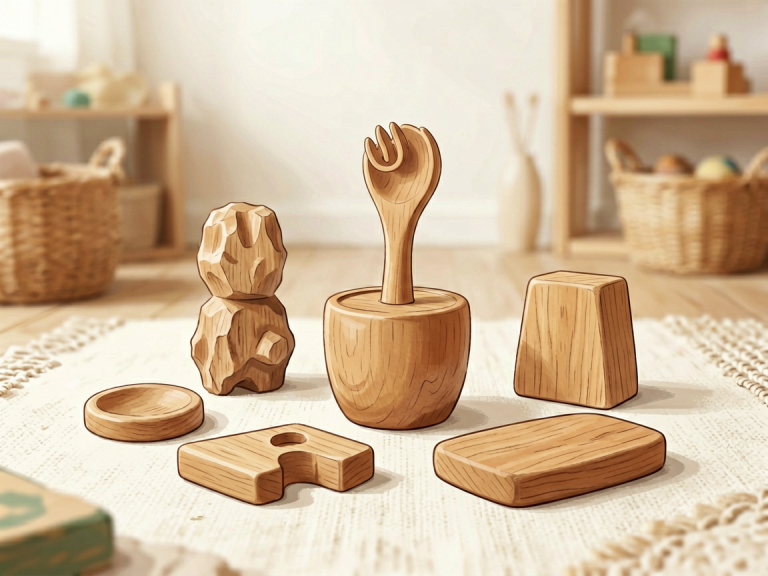
Beginner building toys are designed for the youngest builders, typically ages 1.5 to 5. Their primary purpose is to introduce basic concepts of shape, balance, and spatial awareness while allowing free, unstructured play. The most iconic of these is the classic wooden block set. Simple cubes, cylinders, and arches invite toddlers to stack, knock down, and experiment with gravity. There is no instruction manual; the only rule is imagination. These toys develop fine motor skills and hand-eye coordination as small hands grasp and place pieces.
Another beginner favorite is the large interlocking plastic brick, such as Lego Duplo. These oversized bricks are easy to handle and snap together with audible clicks, offering immediate gratification. Sets often include themed elements like animals or vehicles, but the real value lies in mixing parts to create something new. At this stage, the focus is on creativity, not following instructions. The child learns that a building can be a house, a tower, or a spaceship—the same pieces can become anything.
Magnetic building tiles (like Magna-Tiles) are also excellent for beginners. Their translucent shapes and strong magnets make it easy to build stable structures quickly. Children discover geometric principles as they combine squares and triangles to form cubes, pyramids, and even simple bridges. The magnetic force itself is a source of fascination. Beginner toys encourage trial and error without frustration: if a tower falls, it takes only seconds to rebuild. This low-risk environment builds confidence and a love for construction.
Level 2: Intermediate – Engineering and Complexity
As children grow—typically ages 5 to 10—they crave more challenge and more realistic creations. Intermediate building toys introduce structured problem-solving, mechanical elements, and the concept of following instructions while still allowing customization. Classic Lego System bricks (smaller than Duplo) are the natural next step. Sets come with step-by-step booklets, teaching the builder to read diagrams and follow sequential logic. A child who can build a Lego police car from a kit learns patience and attention to detail. But the real growth comes when they modify the design or combine multiple sets into a unique creation.
Mechanical construction sets, such as K’NEX or Lego Technic, take this further. These toys introduce gears, pulleys, axles, and motors. A beginner-to-intermediate builder can construct a working crane that actually lifts a load or a wind-up car that rolls across the floor. Understanding how teeth of a gear mesh or how a belt transfers motion is a tangible lesson in physics. Many intermediate sets also include simple levers and wheels, allowing the child to explore the principles of mechanics through play. Building becomes an active experiment: “What happens if I change the gear ratio?” “Will the structure hold if I add another floor?”
Another excellent intermediate category is magnetic construction systems for older children, like Geomag or SmartMax. These use magnetic rods and steel balls to create complex geometric structures, from simple skeletons to intricate Buckyballs. They teach structural integrity and force distribution without the need for locking pieces. At this level, builders often start planning before building, sketching ideas or mentally visualizing a 3D shape. Intermediate toys also foster collaboration; two children working together on a large K’NEX roller coaster must communicate and share tasks.
Level 3: Advanced – Robotics, Coding, and Real-World Simulation
Advanced building toys—often aimed at ages 10 and up, including adults—integrate electronics, programming, and precision engineering. They transform a builder from a constructor into an engineer. The most prominent examples are programmable robotics kits like Lego Mindstorms, VEX Robotics, or the Arduino-based Makeblock kits. These systems include microcontrollers, sensors (ultrasonic, touch, light), motors, and a programming environment (often drag-and-drop or text-based).
Building a robot that can navigate a maze or follow a line involves multiple disciplines. The builder must first assemble the mechanical chassis using beams, gears, and axles—applying the skills from intermediate level. Then they must wire the sensors and motors to the control hub, understanding circuits and polarity. Finally, they must write a program that reads sensor data and commands the motors accordingly. Debugging a robot that keeps crashing into walls teaches logical reasoning and iterative testing as effectively as any formal class.
Beyond robotics, advanced building toys include 3D construction kits like the metal Erector sets (Meccano) or the precision plastic model kits from companies like Tamiya or Revell. These require painstaking assembly of hundreds of tiny parts, often using screwdrivers and wrenches. The result is a highly detailed replica of a car, airplane, or even a working clock. Such kits teach patience, manual dexterity, and the value of following complex technical drawings.
Another rapidly growing area is modular building systems for adults, such as the wooden architectural models from Robotime or the metal mechanical models from UGEARS. These are true brain-teasers: you assemble a wooden gear train that powers a miniature Ferris wheel or a safe with a combination lock. There is no motor, no battery—only pure mechanical ingenuity. Advanced builders appreciate the elegance of a design that works purely through kinetic energy. Finally, the world of 3D printing pens and printers has blurred the line between building toy and tool. While not a traditional toy, a 3D pen allows a builder to draw in three dimensions, creating custom parts for other projects.
The Learning Curve and Benefits
The progression from beginner to advanced building toys mirrors a classical educational path: from concrete to abstract, from simple to complex, from guided to open-ended. Research consistently shows that such play enhances spatial intelligence, math skills, and even social-emotional development. Beginners learn cause and effect. Intermediates learn systems and mechanics. Advanced builders learn coding, electronics, and project management.
Crucially, building toys can be revisited at different levels. A child who struggled with Lego at age 4 may become a Lego master by age 8. An adult who never built a robot as a child can start with an Arduino kit and a YouTube tutorial. The key is to match the toy to the builder’s current abilities while offering a slight stretch—what educators call the zone of proximal development. Too easy leads to boredom; too hard leads to frustration.
Moreover, building toys have evolved to include digital companions. Many advanced kits offer apps that guide construction and programming, while beginner toys often have companion storybooks that spark ideas. This integration of physical and digital play is a hallmark of 21st-century learning.
Conclusion
Building toys are far more than diversions. They are a lifelong journey of discovery. Starting with a pile of colorful wooden blocks, a child learns that they can create something from nothing. Moving through interlocking bricks and mechanical sets, they gain control over their environment. Finally, with robotics and complex assemblies, they become creators of intelligent machines. Each level builds on the last, developing skills that are valuable in school, career, and life. Whether you are beginning your own journey or guiding someone else’s, the world of building toys offers infinite possibilities. The only limit is your imagination—and perhaps the size of your storage bin. So pick up a block, snap a gear, or solder a wire. The adventure awaits.