Unlocking Young Minds: The Transformative Power of Advanced Science Kits for Kids
Introduction: Beyond the Toy Box
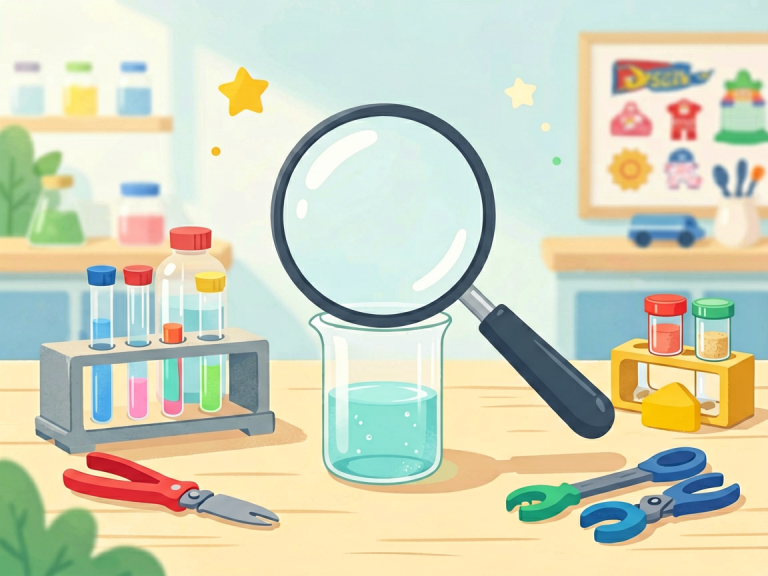
In an era defined by rapid technological evolution and a growing emphasis on STEM (Science, Technology, Engineering, and Mathematics) education, parents and educators are constantly seeking tools that can bridge the gap between playful curiosity and serious learning. Traditional science kits—often limited to a few colored liquids, a magnifying glass, or a simple circuit—have long served as a child’s first window into the wonders of chemistry, physics, and biology. Yet a new generation of products is redefining what is possible. Advanced science kits for kids are no longer mere playthings; they are sophisticated, modular systems designed to simulate real-world scientific inquiry. These kits incorporate programmable microcontrollers, precision sensors, chemical reagents suitable for safe yet authentic experiments, and even artificial intelligence components. By blending hands-on experimentation with computational thinking, they transform a child’s bedroom into a mini-laboratory, a workshop, and a launchpad for future innovation. This article explores the unique design principles, educational benefits, and broader implications of these advanced kits, demonstrating why they represent a paradigm shift in how children engage with science.
1. The Anatomy of an Advanced Science Kit: More Than a Collection of Parts
What distinguishes an advanced science kit from its elementary predecessor? The answer lies not just in complexity, but in intentional design for open-ended exploration. Modern kits are built around several core features:
- Modularity and Interchangeable Components: Instead of a single, one-time experiment, advanced kits offer a base platform—often a microcontroller board (like the Arduino or micro:bit) combined with a set of modular sensors (temperature, humidity, pH, motion, light, sound) and actuators (motors, LEDs, buzzers). Children can reconfigure these blocks in countless ways, allowing them to build a weather station one day and a plant-watering robot the next. This modular architecture encourages iterative design, a cornerstone of engineering thinking.
- Integration with Digital Tools: Many advanced kits sync with tablets or computers via Bluetooth or USB. Dedicated apps or web-based interfaces present data visually, allowing children to graph temperature changes over time, calibrate sensors, or write simple code using block-based languages (like Scratch) or, for older kids, text-based Python. This digital layer turns abstract concepts—like the inverse-square law of light or the exponential growth of bacteria—into tangible, interactive visualizations.
- Safety Within Authenticity: One common concern is that advanced science involves hazardous materials or dangerous voltages. However, reputable manufacturers carefully balance authenticity with safety. For instance, a kit might include genuine copper sulfate for crystal growing (non-toxic in small, controlled amounts) rather than a substitute, while also providing proper gloves, goggles, and clear hazard warnings. Some kits even use encapsulated reagents or low-voltage components (typically 3–5 volts) to eliminate shock risks. This fidelity allows children to experience the thrill of real science without compromising well-being.
2. Cognitive and Developmental Benefits: From Curiosity to Critical Thinking
The pedagogical value of an advanced science kit extends far beyond memorizing facts. When a child connects a soil moisture sensor to a microcontroller, writes a few lines of code to activate a pump when the soil is dry, and watches their basil plant thrive, they are engaging in multiple cognitive processes simultaneously:
- Hypothesis Testing and Experimental Design: Unlike a passive textbook diagram, a kit demands that the child pose a question (“How does light color affect plant growth?”), design an experiment (use red vs. blue LEDs for two plants), collect data (log growth daily with a camera and a ruler), and draw conclusions. This mirrors the scientific method, but with immediate, satisfying feedback.
- Computational Thinking: Coding, even at a block-based level, teaches logic, sequencing, pattern recognition, and debugging. A child who writes “if temperature > 30°C, then turn on fan” is learning conditional statements, a foundational concept in both computer science and everyday reasoning. Over time, they learn to break complex problems (e.g., “automate a greenhouse”) into smaller, manageable steps—a skill transferable to any discipline.
- Resilience and Grit : Real experiments fail. A circuit might not connect, a sensor might give erratic readings, or a chemical reaction might fizzle. Advanced kits inherently teach that failure is informative. The child must diagnose the problem, re-read instructions, test alternative hypotheses, and try again. This process builds what psychologist Angela Duckworth calls “grit”—a perseverance that conventional multiple-choice tests rarely cultivate.
- Cross-Disciplinary Connections : A single project often merges biology (plant growth), physics (light spectrum), chemistry (fertilizer concentration effects), and engineering (automated watering system). Children naturally see the interconnectedness of scientific fields, a perspective that becomes invaluable as they progress to higher education and careers.
3. Practical Applications: What Kits Are Available and How to Choose
The market for advanced science kits has exploded in recent years. Below are several exemplary categories, each targeting different age groups and interests:
- Electronics & Coding Kits: The SparkFun Inventor’s Kit for micro:bit offers roughly 14 experiments, including a lie detector (using skin conductance), a light theremin, and a motion-activated alarm. It includes a comprehensive guidebook that explains both the circuitry and the coding steps. Similarly, the littleBits Code Kit uses magnetic electronic “bits” that snap together, eliminating soldering while still teaching concepts like loops, functions, and variables.
- Chemistry & Biology Kits: Thames & Kosmos’s Chem C3000 is a university-level kit in a child-friendly package. It includes 333 experiments, from electrolysis to chromatography, and introduces real laboratory techniques like titration and distillation. For biology, the National Geographic Break Open a Geode Kit is simple, but more advanced are MEL Science subscription boxes, which deliver VR-enabled chemistry experiments where children synthesize polymers, grow crystals, and even watch chemical reactions at the molecular level through a companion app.
- Robotics & Mechanical Engineering Kits: LEGO Mindstorms Robot Inventor (now succeeded by SPIKE Prime) allows children to build and program complex robots with motors, sensors, and a programmable hub. It uses a drag-and-drop coding environment based on Scratch, but also supports Python for advanced users. The Makeblock mBot2 is another popular choice, offering a car-like chassis that can be programmed to follow lines, avoid obstacles, and even carry small loads.
When choosing a kit, consider the child’s age (most advanced kits are labeled 8+ or 10+), the level of parental involvement required, and the depth of online support. Kits with active community forums, video tutorials, and downloadable lesson plans significantly enhance the learning experience. Also, prioritize kits that align with the child’s current passion: a budding astronaut might enjoy a solar system model with a light sensor that tracks the sun, while a future doctor might prefer a human anatomy model with electronic sensors that simulate heartbeats.
4. Beyond the Kit: Fostering a Lifelong Scientific Mindset
The ultimate goal of an advanced science kit is not to produce a finished robot or a perfect crystal, but to ignite a spark that endures long after the batteries die. These kits serve as accessible entry points to a world where curiosity is rewarded, questioning is encouraged, and discovery is personal. Parents and educators can maximize this impact by:
- Encouraging Documentation: Have the child keep a “lab notebook” where they write predictions, sketch designs, record data, and reflect on failures. This habit mirrors real scientific practice and reinforces literacy skills.
- Promoting Peer Collaboration: Many kits can be used in groups. Organize a “science fair” among friends or siblings where each child presents a modified experiment. Explaining one’s process to others deepens understanding and builds communication skills.
- Bridging to Real-World Careers: Use the kit as a springboard to explore professions. For instance, after building a weather station, watch a meteorologist’s interview online; after coding a game, introduce the concept of a software engineer’s daily work. This contextualization shows children that the skills they are developing have genuine value.
5. Challenges and Considerations: The Fine Line Between Challenge and Frustration
Despite their many benefits, advanced science kits are not without pitfalls. Overly complex instructions, poor-quality components, or insufficient online support can quickly turn excitement into discouragement. Research suggests that the optimal learning environment is one of “productive struggle”—challenging but achievable with effort. Manufacturers must therefore strike a delicate balance: too simple, and the child loses interest; too difficult, and they give up. Additionally, equity is a serious concern. High-quality advanced kits can cost anywhere from $60 to $300, creating a barrier for lower-income families. Schools, libraries, and community centers can help by offering lending programs or organizing maker spaces where these kits are shared.
Another consideration is screen time. While many kits use apps and computers as part of the experience, parents should ensure that the digital component does not overshadow the hands-on physical exploration. The best kits treat the screen as a tool, not a destination—a way to visualize data or control inputs, while the real learning happens through touching, building, and observing.
Conclusion: The Laboratory of Tomorrow, Today
There was a time when “advanced science” for children meant a dusty encyclopedia or a school laboratory locked behind a glass door. Today, advanced science kits have democratized exploration, bringing the excitement of genuine research into living rooms and classrooms worldwide. They teach not only facts but the process of inquiry: how to ask a question, how to test an answer, and how to learn from failure. In a world grappling with complex challenges—climate change, pandemics, technological ethics—the next generation needs more than memorized equations; it needs adaptable, creative, and resilient thinkers. An advanced science kit is not a toy. It is a toolkit for building that future, one experiment at a time. By investing in these sophisticated resources, we are not just teaching science—we are empowering children to become scientists, engineers, and problem solvers who will shape the world of tomorrow. The only question now is: which kit will open the door for the next curious mind?