The Art of Solitude: Why Independent Play Is Essential for Your Child’s Development
Introduction: The Quiet Revolution in Child Rearing
In an era of hyper-scheduled extracurricular activities, screen-saturated leisure time, and well-meaning parents who hover like helicopters, the concept of independent play has become almost revolutionary. We live in a culture that prizes constant engagement, structured learning, and adult-led activities. Yet, beneath the surface of this busyness, a quieter, more profound process is unfolding—or rather, should be unfolding—in the lives of our children. Independent play, the unscripted, self-directed, and often solitary activity that children initiate and control on their own terms, is not merely a way to keep them occupied. It is a fundamental building block of cognitive, emotional, and social development. This article explores the science, the benefits, and the practical strategies for fostering independent play in children, and argues that in giving our children the gift of solitude, we give them the tools to become resilient, creative, and self-reliant adults.
The Biological and Psychological Foundations of Independent Play
The Brain’s Natural Laboratory
From a neurological perspective, independent play is the brain’s natural laboratory. When a child builds a fort out of couch cushions, creates an imaginary kingdom with a few action figures, or simply stares at a swirling leaf caught in a puddle, their brain is engaged in a complex process of exploration, hypothesis testing, and neural wiring. Neuroscientists have long understood that unstructured play activates the prefrontal cortex, the area responsible for executive functions such as decision-making, impulse control, and flexible thinking. Unlike adult-directed activities, where the outcome is predetermined, independent play forces the child to generate their own goals, adapt to unexpected obstacles, and evaluate their own success. This self-directed feedback loop strengthens synaptic connections in ways that passive entertainment or rigid instruction simply cannot.
The Role of Boredom in Creativity
Surprisingly, boredom is the unsung hero of independent play. Many parents rush to fill every moment of their child’s day with activities, apps, or entertainment, fearing that emptiness will lead to restlessness or behavioral issues. But research shows that moderate boredom is a catalyst for creativity. When children are left alone with their own thoughts and a blank canvas of time, they are compelled to innovate. A child who complains, “I’m bored,” and then discovers that a cardboard box can become a spaceship, a castle, or a time machine, is learning the most valuable lesson of all: that they have the internal resources to overcome ennui. Independent play, therefore, is not about avoiding boredom, but about transforming it into something meaningful.
The Multidimensional Benefits of Independent Play
Cognitive Development: From Problem-Solving to Metacognition
Independent play is a powerhouse of cognitive growth. A toddler stacking blocks and watching them fall is engaged in early physics experiments. A preschooler creating a rule system for an imaginary game is learning logic and sequence. An older child building a complex Lego structure from a picture—or, better yet, from their own imagination—is practicing spatial reasoning, planning, and perseverance. Importantly, independent play also fosters metacognition—the ability to think about one’s own thinking. Without a parent or teacher constantly providing cues, children must monitor their own progress, ask themselves questions like “Why didn’t this work?” and adjust their strategies accordingly. This internal dialogue is the foundation of self-regulated learning, a skill that predicts academic success far better than IQ scores.
Emotional Regulation and Resilience
Perhaps the most profound benefit of independent play lies in emotional development. In the safe, low-stakes environment of self-directed play, children encounter and manage small frustrations. The tower falls. The puzzle piece doesn’t fit. The imaginary friend changes the rules. These mini-challenges teach children that failure is not catastrophic—it is simply part of the process. They learn to soothe themselves, to take a deep breath, and to try again. This builds what psychologists call “emotional granularity”—the ability to identify and label complex emotions. A child playing alone might feel frustration, then curiosity, then satisfaction. They learn that emotions are transient and manageable. Moreover, independent play provides a space for processing real-life experiences. Children often reenact scenes from the day—a doctor’s visit, a conflict with a friend, a family event—through solitary play, which helps them make sense of their world and gain a sense of control.
Social Skills: The Paradox of Solitary Play
It might seem counterintuitive, but independent play is essential for social development. When children learn to be comfortable alone, they develop a secure sense of self. They do not rely on others for constant validation or entertainment. This self-sufficiency then becomes the foundation for healthier social interactions. A child who can play independently is less likely to become clingy, demanding, or overly dependent in group settings. They enter peer interactions with a stronger sense of boundaries and autonomy. Furthermore, solitary play often involves imagining conversations, negotiating with imaginary characters, and rehearsing social scripts. This “private speech,” as developmental psychologist Lev Vygotsky called it, sharpens language skills and social cognition. In essence, independent play is a dress rehearsal for the complex social world.
Practical Strategies for Cultivating Independent Play
Creating the Right Environment
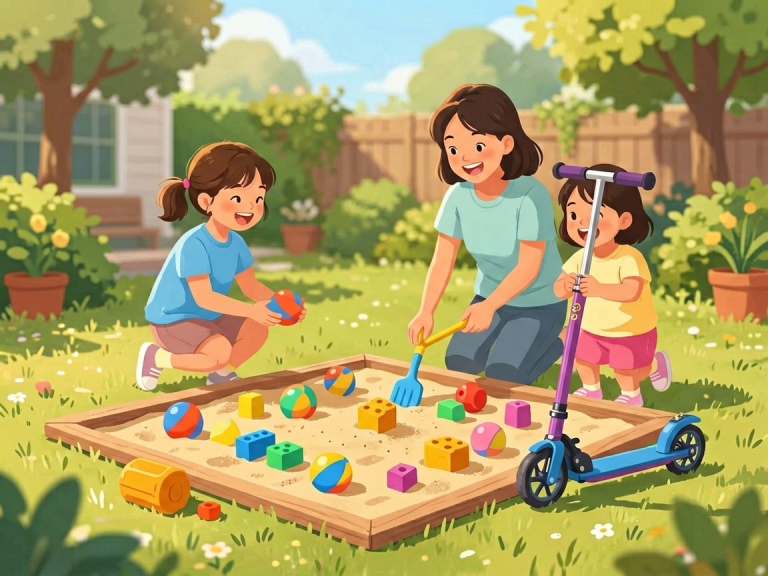
The first step in encouraging independent play is to create a physical and psychological environment that invites it. This means providing open-ended materials—blocks, art supplies, dress-up clothes, natural objects like sticks and rocks—rather than toys with a single, prescribed function. The environment should be safe and child-proofed, allowing the child to explore without constant parental intervention. But equally important is the psychological environment: parents must resist the urge to direct, correct, or applaud every move. This can be challenging for parents who equate involvement with love. However, stepping back sends a powerful message: “I trust you. You can do this.”
The Art of the Slow Fade
Many parents complain, “My child won’t play alone for more than five minutes.” This is often because the child has become accustomed to constant adult engagement. The solution is not to withdraw abruptly, but to use a technique known as the “slow fade.” Start by sitting nearby while your child plays, offering a minimal presence—perhaps reading a book yourself. Gradually increase the distance and duration of your absence. If the child cries or calls for you, respond calmly but briefly: “You’re okay. I’m in the next room. I’ll check on you in a few minutes.” Consistency builds security. Over time, the child internalizes the message that solitude is safe and even enjoyable.
Balancing Structure and Freedom
It is important to distinguish between independent play and neglect. Children still need routines, boundaries, and the assurance that a responsive adult is available when needed. A good strategy is to schedule dedicated “independent play time” into the daily rhythm, much like you would schedule meals or bedtime. For young children, 15–30 minutes might be sufficient; for older ones, an hour or more is ideal. During this block, the parent commits to not interrupting unless there is a safety concern. This structure actually frees the child to focus because they know the time is theirs. Outside of these blocks, parents can still engage in joint play, read together, and provide enrichment. The key is balance.
Overcoming Common Obstacles and Myths
The Screen Seduction
One of the greatest obstacles to independent play in the 21st century is the omnipresence of screens. Tablets, phones, and televisions provide constant, passive stimulation that is far more immediately rewarding than the effortful process of self-directed play. Screens hijack the brain’s dopamine system, making the slow reward of building a block tower seem dull by comparison. The solution is not to demonize technology, but to create clear boundaries. Designate screen-free zones and times. Model screen-free behavior yourself. And, crucially, allow your child to experience the initial discomfort of boredom without rushing to offer a digital pacifier. That discomfort is the seed of creativity.
The Myth of Constant Happiness
Some parents worry that independent play means their child is lonely or unhappy. They mistake solitude for isolation. But there is a vast difference between playing alone and feeling alone. A child deeply engrossed in their own world often exhibits a state of “flow”—a complete absorption in the present moment that is associated with joy and satisfaction. Being alone does not mean being sad. In fact, children who are comfortable in independent play are often better able to enjoy group play because they bring a sense of wholeness to their interactions. The goal is not to eliminate social play, but to ensure that children have both options: the richness of companionship and the depth of solitude.
The Parent’s Own Anxiety
Finally, we must acknowledge that fostering independent play often requires parents to confront their own discomfort. Many of us have been conditioned to believe that “good” parenting means constant interaction, teaching, and monitoring. Letting go can feel like neglect. But research consistently shows that over-parenting—intervening too quickly, solving problems for the child, providing constant stimulation—actually undermines a child’s sense of competence and autonomy. Parents need to practice their own form of independent play: stepping back, trusting the process, and allowing the child to stumble, struggle, and succeed on their own terms. It is an act of faith, but one that pays extraordinary dividends.
Conclusion: The Gift That Keeps on Giving
Independent play is not a luxury or a convenience for busy parents. It is a fundamental human right of childhood—a time when the mind wanders, the imagination soars, and the self takes shape without external scaffolding. In a world that increasingly demands constant connectivity, productivity, and external validation, the ability to be alone and content is a survival skill. It is the quiet confidence that says, “I am enough. I can create my own joy. I can solve my own problems.”
By carving out space for independent play in our children’s lives, we are not neglecting them; we are honoring their capacity for wonder, their innate curiosity, and their journey toward becoming whole, independent human beings. So put down the tablet. Step back from the train set. Let your child stare at a cloud, turn a cardboard box into a rocket, or simply sit still in thought. In that unglamorous, unstructured, priceless moment, they are building a world—and themselves—from the inside out. That is the most important work they will ever do.
Sources and further reading
For additional evidence-based guidance, consult these authoritative resources: