Navigating the Developmental Toy Path for 4-Year-Olds: A Guide to Purposeful Play
Introduction: Why a Toy Path Matters at Age Four
The fourth year of life is a remarkable frontier of cognitive, physical, and social-emotional growth. At this age, children are no longer toddlers flinging blocks indiscriminately; they are budding storytellers, problem-solvers, and rule-makers. A developmental toy path — a carefully sequenced series of playthings that meet a child's evolving needs — becomes essential not for "teaching" in the traditional sense, but for scaffolding exploration, mastery, and joy. Unlike random toy collections, a thoughtful path respects the 4-year-old's brain plasticity, short attention span, and hunger for both independence and connection. This article outlines a comprehensive, age-appropriate toy path for 4-year-olds, backed by developmental science and practical experience. The goal is not to prescribe an expensive shopping list but to equip parents, educators, and caregivers with principles that turn any toy into a tool for growth.
Understanding the 4-Year-Old Mind: Key Developmental Milestones
Before selecting toys, one must understand the child they are serving. A 4-year-old typically exhibits:
- Enhanced language skills: Sentences of five to six words, frequent questions ("Why?"), and emerging storytelling.
- Pretend play sophistication: Role-playing with complex plots (e.g., pretending to be a doctor diagnosing a stuffed animal).
- Fine motor progress: Better control of scissors, crayons, and small objects; some can write a few letters or numbers.
- Gross motor leaps: Hopping on one foot, catching a ball, climbing confidently.
- Social-emotional changes: Friendships become important; sharing is still challenging but improving; empathy begins to show.
- Cognitive growth: Sorting by size/color, counting to 10, understanding basic time concepts (yesterday/tomorrow), and early cause-and-effect reasoning.
A toy path for 4-year-olds must address all these domains without overwhelming the child. The sequence should move from concrete to slightly abstract, from solitary to cooperative, and from simple manipulation to creative construction.
Stage 1: Foundational Building Blocks – Strengthening Fine and Gross Motor Skills (Ages 3.5–4.0)
Purposeful Movement Toys
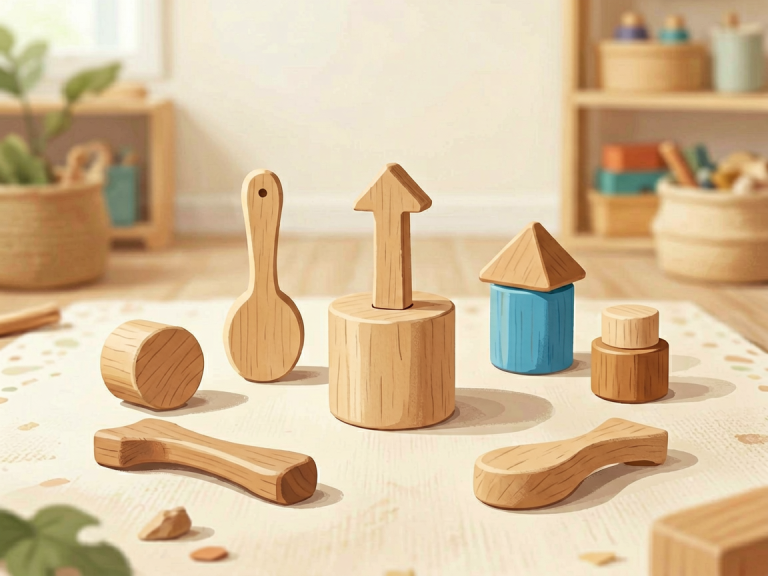
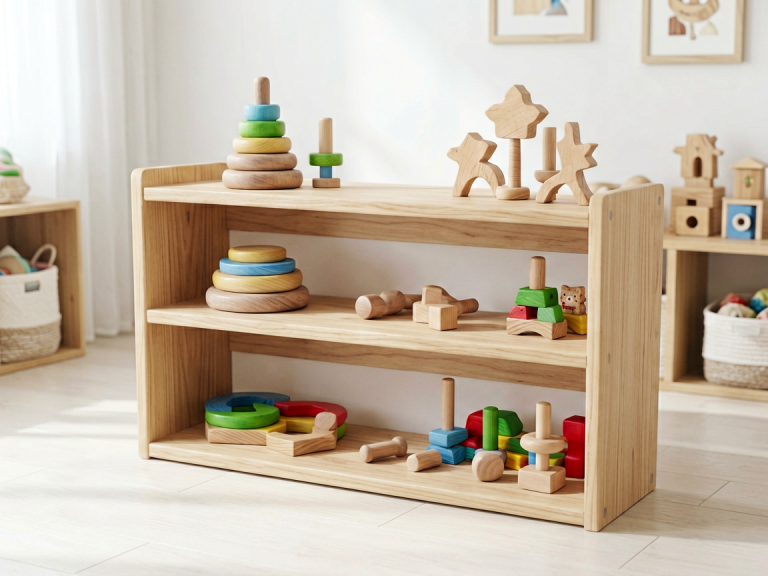
At the start of the fourth year, children still benefit immensely from toys that consolidate motor foundations. Large building blocks (such as wooden unit blocks or LEGO Duplo) are non-negotiable. They require both hands to lift, stack, and balance, engaging core muscles and hand-eye coordination. A 4-year-old can build towers as tall as himself, then knock them down — an act that teaches gravity, spatial relations, and emotional regulation (the thrill of destruction followed by reconstruction).
Trikes and balance bikes also belong here. Pedaling strengthens legs, while steering develops bilateral coordination. For a 4-year-old, a tricycle with a push handle allows adults to supervise safely. Alternatively, a balance bike (no pedals) builds confidence in gliding and balancing, preparing the child for a two-wheeler later.
Fine Motor Tools
Playdough with simple tools (rolling pin, plastic knives, cookie cutters) is a powerhouse. Squeezing, pinching, and rolling dough strengthens the small hand muscles needed for writing. Add googly eyes and pipe cleaners to transform balls into creatures, merging motor work with creativity.
Large lacing beads (with holes at least half an inch wide) train the pincer grip. A 4-year-old can string beads into patterns, counting aloud as she goes. This activity also fosters patience — a rare but trainable virtue at this age.
Stage 2: Pretend Play Expansion – Social-Emotional and Language Growth (Ages 4.0–4.5)
Dramatic Play Kits
Around the midpoint of the fourth year, imaginative play peaks. A doctor's kit (with toy stethoscope, syringe, bandages) lets the child reenact real-life experiences, processing anxieties about check-ups while practicing empathy. Similarly, a kitchen set with plastic food, pots, and utensils invites cooperative play with siblings or parents. The child can "cook" a meal, serve it, and "eat" — a sequence that reinforces narrative structure.
Costumes (simple capes, hats, animal masks) unlock character exploration. A 4-year-old who puts on a firefighter helmet becomes brave; one who wears a butterfly wings becomes delicate. This role-play is the foundation of theory of mind — understanding that others have feelings and perspectives different from one's own.
Storytelling Props
Puppets — especially finger puppets or simple hand puppets — encourage dialogue. A child can hold a conversation between two puppets, practicing turn-taking and voice modulation. Felt boards with movable shapes allow the child to act out stories from memory or invent new ones. These toys build vocabulary, sequencing, and narrative logic in a low-pressure way.
Stage 3: Cognitive Challenge – Puzzles, Patterns, and Early Math (Ages 4.5–5.0)
Jigsaw Puzzles and Logic Games
A 4-year-old's ability to recognize shapes and match edges has improved dramatically. Floor puzzles with 24–48 large pieces are ideal. Working on a puzzle teaches spatial reasoning, persistence, and the concept of parts forming a whole. Choose puzzles with familiar scenes (farm, ocean, dinosaurs) to sustain interest.
Simple board games like "Candy Land" or "Hi Ho! Cherry-O!" introduce turn-taking, counting, and coping with winning/losing. These games are not about skill but about following rules — a crucial social-cognitive milestone. Look for games that rely on luck rather than strategy, so the child does not feel unfairly outmatched.
Sorting and Sequencing Toys
Count-and-see sets (e.g., plastic bears in three sizes and four colors) allow open-ended sorting: "Put all the red bears here, all the blue there." Later, the child can create patterns (red-blue-red-blue) or count bears into groups of five. This is pre-math learning, but it feels like play. Magnetic number puzzles or wooden number trains help associate symbols with quantities.
Memory card games (matching pairs) challenge working memory. Flip over two cards, find a match, keep them. The excitement of remembering where the zebra was hiding sharpens focus and concentration.
Stage 4: Creative Expression – Art, Music, and Construction (Ages 4.0–5.0, Ongoing)
Open-Ended Art Supplies
By age four, children are ready for more than chunky crayons. A watercolor set with a brush, safety scissors, glue sticks, and a stack of colored paper invites collage-making. Washable markers and chalk (for chalkboards or pavement) allow large-scale drawing. The emphasis should be on process, not product — let the child mix colors, tear paper, and layer shapes.
Modeling clay (harder than playdough) encourages sculpting. A child might make a snake, a bowl, or a "cake" with tiny beads as sprinkles. This three-dimensional art develops spatial thinking and hand strength.
Musical Exploration
A simple xylophone, tambourine, or set of rhythm sticks lets the child experiment with sound and rhythm. Singing along to a toy microphone builds vocal confidence. Music activates both hemispheres of the brain and supports pattern recognition. No need for formal lessons; just free exploration is sufficient.
Construction Sets
Beyond blocks, magnetic building tiles (like Magna-Tiles) are a 4-year-old delight. They snap together easily, creating 3D structures — castles, rockets, bridges. The translucent colors add beauty. These tiles teach geometry (squares, triangles), magnetism physics, and architectural principles (what makes a tower stable?). Interlocking plastic bricks (like standard LEGO) can also be introduced, but supervise because small pieces may still be a choking hazard for some 4-year-olds.
Stage 5: Social and Cooperative Play – Games with Simple Rules (Ages 4.0–5.0)
Cooperative (Non-Competitive) Games
While competitive games have a place, many 4-year-olds struggle with losing. Cooperative games where all players work together to achieve a goal are invaluable. For example, "The Sneaky, Snacky Squirrel Game" (players help the squirrel collect acorns before the spinner shows the "wind" that blows them away) teaches teamwork. "Hoot Owl Hoot!" requires players to move owls to the nest before the sun rises. These games reduce frustration and build a sense of collective accomplishment.
Simple Card and Dice Games
Uno Junior or Go Fish (with picture cards) reinforce memory, matching, and social etiquette ("Do you have any…?"). Rolling dice and moving a game piece one-to-one counting reinforces number sense. Keep game sessions short (10–15 minutes) and celebrate effort, not outcome.
Practical Considerations for Building a Toy Path
Quality Over Quantity
A 4-year-old does not need a roomful of toys. Ten well-chosen items that target different developmental domains are more valuable than fifty cheap plastic gadgets. Rotate toys weekly to maintain novelty; put half away and swap them out. This prevents overwhelm and rekindles interest.
Safety and Durability
Toys should be non-toxic, with no small parts that can be swallowed (even though most 4-year-olds have outgrown mouthing, supervision is still wise). Look for solid wood, BPA-free plastics, and washable fabrics. Avoid toys that require excessive adult assembly or that break easily.
Follow the Child's Lead
A developmental toy path is a guide, not a straitjacket. If your 4-year-old spends two hours stacking blocks and ignores the puzzle, that is fine. The path adjusts based on the child's interests. Observe what captures their attention — is it building? Drawing? Pretending? Lean into those strengths while gently introducing new challenges.
Conclusion: The Toy Path as a Lifelong Gift
The developmental toy path for 4-year-olds is ultimately about respecting childhood as a time of wonder. When we choose toys that align with how a four-year-old thinks, moves, and feels, we are not merely filling hours — we are building neural connections, emotional resilience, and a love for learning. A block tower that falls teaches patience and problem-solving. A puppet show teaches empathy and language. A puzzle teaches focus and pattern recognition. Each toy is a tiny companion on the journey from toddlerhood to school age. By curating a path with intention, we give our children the most precious gift: the joy of discovering, through play, who they are and who they might become.