From Blocks to Brains: The Rise of Advanced Toys for Critical Thinking
—
Introduction
In an era defined by rapid technological disruption and information overload, the ability to think critically—to analyze, evaluate, and synthesize information in a reasoned way—has become more precious than ever. Educators, psychologists, and parents alike search for effective methods to nurture this skill in children from an early age. While traditional schooling often focuses on rote memorization and standardized testing, a quiet revolution is taking place in the toy aisle. The humble plaything has evolved from a simple source of entertainment into a sophisticated tool for cognitive development. “Advanced toys for critical thinking” are no longer niche products; they represent a paradigm shift in how we understand learning through play. These toys are meticulously designed to present open-ended challenges, require strategic reasoning, and reward iterative experimentation. This article explores what makes these toys distinct, how they cultivate foundational cognitive abilities, and why they deserve a central place in modern childhood.
—
What Makes a Toy “Advanced” for Critical Thinking?
Not every complicated gadget qualifies as an advanced toy for critical thinking. The adjective “advanced” here refers not to the complexity of the toy’s parts, but to the depth of the mental processes it demands. True advanced toys share several core characteristics.
First, they are open-ended. Unlike a jigsaw puzzle that has a single correct final state, an advanced critical-thinking toy offers multiple solutions or pathways. A set of modular electronic blocks, for example, can be arranged to create a simple alarm, a light-sensitive switch, or a small robot. This openness forces the child to define their own goal and to evaluate different approaches, rather than merely following instructions.
Second, they require active problem-solving. These toys do not merely entertain passively; they present a genuine challenge that cannot be overcome by luck or guesswork. A logic puzzle that involves moving colored pegs according to rules, or a strategy board game that simulates resource management, forces the player to form hypotheses, test them, and revise their approach based on feedback.
Third, they foster iterative thinking. Failure is not a dead end but a learning opportunity. Advanced toys are designed so that mistakes provide information. A programmable robot that crashes into a wall reveals the need to adjust the angle or speed of the program. This cycle of plan → act → observe → adjust mirrors the scientific method and builds resilience and metacognition—the ability to think about one’s own thinking.
Finally, they are scalable in difficulty. Good toys grow with the child. A beginner might start with a simple coding puzzle on a tablet, but the same platform can later introduce complex loops, conditional statements, and even debugging challenges. This scalability ensures sustained engagement and continuous cognitive stretch.
—
The Pedagogical Power: How These Toys Shape Young Minds
The cognitive benefits of advanced critical-thinking toys extend far beyond the immediate play session. Neuroscientific and educational research increasingly supports the idea that such play strengthens neural pathways associated with executive functions.
Executive function development is one of the most significant outcomes. Executive functions include working memory, inhibitory control, and cognitive flexibility—skills that are essential for academic success and everyday life. When a child plans a sequence of moves in a complex board game like *Settlers of Catan* or *Robot Turtles*, they must hold rules and possible outcomes in mind (working memory), resist the impulse to make a quick but poor decision (inhibitory control), and shift strategies when an opponent blocks their plan (cognitive flexibility). These mental gymnastics are precisely what build a flexible, resilient mind.
Moreover, these toys nurture metacognition—the awareness and understanding of one’s own thought processes. When children explain why they chose a particular strategy, or when they analyze why a program failed, they are practicing metacognitive monitoring. This skill is crucial for self-regulated learning, as it allows children to identify what they don’t know and to seek out effective solutions.
Another critical benefit is the cultivation of growth mindset. Because advanced toys often involve trial and error, children learn that effort and persistence lead to improvement. They begin to see challenges not as threats but as opportunities to grow. This mindset has been shown to predict higher academic achievement and greater long-term motivation.
Finally, these toys encourage collaborative dialogue. Many critical-thinking toys shine in group settings. When children build a Rube Goldberg machine together or program a robot to navigate a maze, they must communicate, negotiate, and justify their ideas. This verbal reasoning is a powerful amplifier of critical thinking, forcing children to articulate their logic and critique the logic of others in a constructive manner.
—
Examples Across Ages: From Puzzles to Programmable Robots
Advanced toys for critical thinking appear in many forms, tailored to different developmental stages. Here are several exemplary categories.
For Early Childhood (Ages 3–6): At this stage, the goal is to lay the foundation for logical reasoning and spatial awareness. Toys like *Gravity Maze* (a marble-run puzzle that requires planning the path) and *Wooden Pattern Blocks* (which encourage geometric pattern recognition) are excellent. Another standout is *ThinkFun’s Roll & Play*, a simple game that uses a dice and cards to prompt action and reflection. These toys are tactile and visual, matching the concrete operational stage of cognitive development.
For Elementary School (Ages 6–10): This is the sweet spot for strategy and coding toys. *Rush Hour*, a sliding-block traffic jam puzzle, is a classic that requires forward planning and spatial reasoning. *Code-a-Pillar* and *Osmo Coding* introduce basic sequencing and logic through physical blocks and camera-based feedback. Board games like *Qwirkle* (a pattern-matching game) and *Blokus* (a territory-occupying strategy game) teach turn-taking, pattern recognition, and strategic foresight.
For Tweens and Teens (Ages 10+): At this level, toys become more complex and may involve electronics or advanced logic. *LittleBits* and *Makey Makey* allow users to build custom circuits that interact with everyday objects, fostering systems thinking and creativity. *Lego Mindstorms* or *VEX Robotics* are programmable robot kits that demand patience, debugging, and engineering principles. Strategy games like *Pandemic* (a cooperative board game about managing a global disease outbreak) require complex decision-making under uncertainty and collaborative problem-solving.
Digital Tools: It would be remiss to ignore digital platforms. Apps like *DragonBox* (which teaches algebra through puzzle mechanics) and *Lightbot* (a coding puzzle game) are designed from the ground up to develop logical reasoning. When used in moderation, these digital advanced toys complement physical toys by offering instant feedback and dynamic difficulty scaling.
—
Choosing the Right Advanced Toy: A Parent’s Guide
With an overwhelming number of products on the market, selecting an appropriate advanced toy requires careful thought. Here are four guiding principles.
1. Consider the child’s current cognitive stage. A toy that is too easy will bore; one that is too difficult will frustrate. The “just right” challenge lies in what psychologist Lev Vygotsky called the zone of proximal development—the space where a child can succeed with a little guidance but is still stretched. Observe your child’s typical play: does she enjoy puzzles or free-form building? Does he prefer competitive games or cooperative ones? Use these clues to match the toy’s demands to the child’s interests and abilities.
2. Look for toys with “hard fun.” A term coined by learning scientist Seymour Papert, “hard fun” describes the feeling of intense engagement that comes from mastering a difficult challenge. A good toy will make the child voluntarily repeat a frustrating task because the satisfaction of solving it is so rewarding. Read reviews that mention replayability and depth of learning.
3. Prioritize toys that encourage multiple solutions. Avoid toys that have a single correct answer. Instead, seek out ones that allow for creative expression, such as building sets, coding kits, or open-ended strategy games. The more ways a child can approach a problem, the more flexible their thinking becomes.
4. Emphasize collaboration over solo play. While solo play has its merits, advanced toys that are designed for two or more players usually promote verbal reasoning, debate, and social negotiation. Board games, cooperative robot challenges, and team-based puzzle hunts are excellent choices. They also help children learn to win and lose gracefully, which is itself a form of emotional critical thinking.
—
The Future of Play: Integrating Technology and Hands-On Learning
As artificial intelligence and augmented reality continue to advance, the next generation of critical-thinking toys will blur the line between physical and digital play. Already, toys like *Sphero* (a programmable robotic ball) can be used in combination with tablets to create interactive stories. *Osmo’s* optical recognition system turns physical drawing into digital game assets, teaching geometry and physics through self-created worlds.
One emerging trend is the use of adaptive difficulty algorithms in physical toys. Imagine a smart puzzle that analyzes a child’s performance and automatically provides a slightly harder challenge or a subtle hint. This personalized scaffolding could accelerate learning without requiring constant adult intervention.
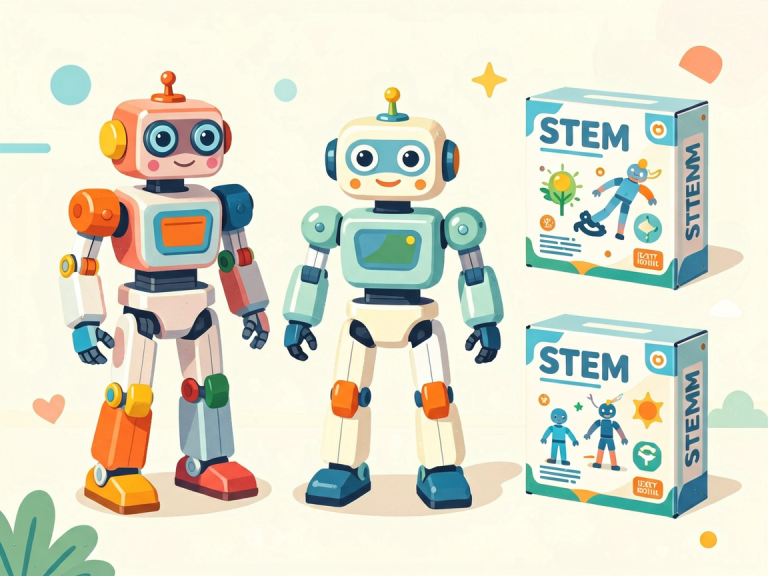
Another promising direction is cross-disciplinary play. Future toys might combine coding, engineering, and artistic design—for example, a robot-building kit that also requires the child to write a persuasive advertisement for their creation, integrating critical thinking with communication and empathy. These “STEAM” (Science, Technology, Engineering, Arts, Mathematics) toys mirror the real-world complexity of problems that require both logical and creative solutions.
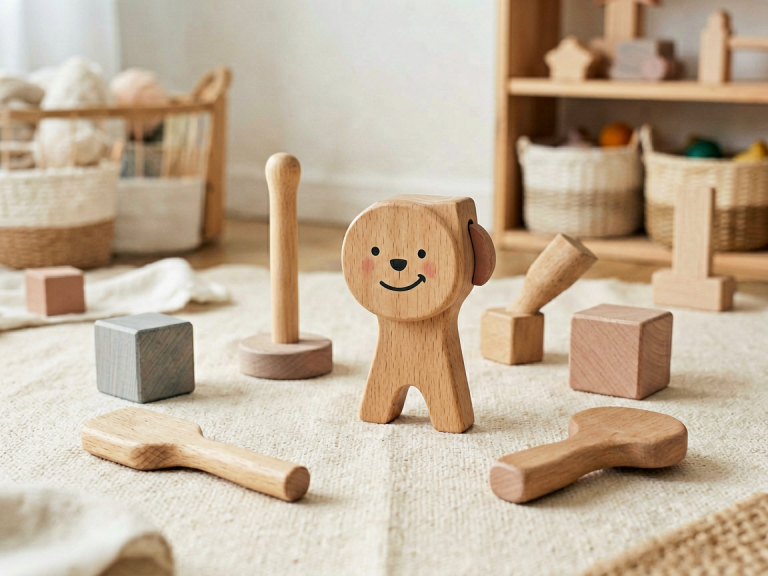
However, we must also guard against the over-commercialization of learning. Not every toy needs a digital component. The most advanced thinking tool is still a box of simple wooden blocks or a deck of cards with clear rules. The true “advancement” lies not in the technology itself, but in the thoughtful design that invites children to question, hypothesize, and persist.
—
Conclusion
Advanced toys for critical thinking are more than a passing trend; they are a vital response to the demands of a complex world. By offering open-ended challenges that demand planning, analysis, and resilience, these toys transform playtime into a powerful cognitive gymnasium. They empower children to become active architects of their own understanding rather than passive recipients of information. As parents and educators, our role is to curate the play environment with care, selecting toys that push the boundaries of thought while preserving the joy of discovery. The next great innovator, doctor, or philosopher may not be forged in a classroom alone, but in the countless hours spent experimenting, failing, and learning with an advanced toy that taught them how to think—not what to think. And that is the most valuable gift any plaything can give.