From Blocks to Pretend Play: A Guide to Toy Progression for Three-Year-Olds
Introduction
The third birthday marks a remarkable milestone in a child’s development. No longer a toddler who stumbles over every step or communicates solely through grunts and pointing, a three-year-old is a whirlwind of curiosity, imagination, and burgeoning independence. At this age, play is not just entertainment—it is the primary vehicle for learning. Understanding the concept of “toy progression” is essential for parents, educators, and caregivers who wish to support a child’s cognitive, physical, social, and emotional growth. Toy progression refers to the deliberate selection of playthings that match a child’s current developmental stage while gently challenging them to acquire new skills. For three-year-olds, this means moving beyond simple cause-and-effect toys (like rattles or push-button toys) and toward more complex, open-ended materials that encourage problem-solving, creativity, and social interaction. In this article, we will explore the key areas of development for three-year-olds and recommend a progression of toys that can foster growth in each domain, ensuring that playtime remains both joyful and educational.
Understanding the Three-Year-Old Mind: Cognitive and Language Development
At three, children experience an explosion in language and cognitive abilities. They can typically speak in short sentences, ask endless “why” questions, and follow two- or three-step instructions. Their attention spans are still short—usually 5 to 10 minutes per activity—but they are capable of sustained focus when deeply engaged. This is also the age when symbolic thinking emerges: a block can become a phone, a stick can be a magic wand, and a cardboard box can transform into a spaceship. Therefore, toy progression should prioritize items that encourage representational play and early problem-solving.
Recommended cognitive toys: Simple puzzles with 4 to 12 pieces (especially those with knobs or chunky shapes), matching games that involve colors or animals, sequencing toys (like stacking rings or nesting cups), and basic memory card games. These toys help develop pattern recognition, categorization, and short-term memory. Additionally, picture books with repetitive phrases and lift-the-flap elements support language acquisition and narrative understanding. Avoid toys that are overly electronic or passive; three-year-olds learn best through hands-on manipulation and trial-and-error.
Fine Motor and Gross Motor Development: Building Strength and Coordination
Physical development at this age is rapid. Three-year-olds are refining their fine motor skills—they can hold a crayon with a tripod grip, snip with safety scissors, and string large beads. Gross motor skills also advance: they can walk up and down stairs with alternating feet, pedal a tricycle, and throw a ball overhand. Toy progression should offer opportunities for both types of movement, as these skills lay the foundation for handwriting, self-care (buttoning, zipping), and later athletic activities.
Recommended fine motor toys: Playdough (with tools like rollers and cookie cutters), large threading beads, pegboards, chunky crayons or washable markers, and simple lacing cards. These toys strengthen the small muscles in the hands and improve hand-eye coordination. For gross motor development, consider a small tricycle or balance bike, a soft ball for catching and throwing, a mini trampoline (with adult supervision), or a set of stepping stones for balancing. Climbing structures—even a low couch cushion fort—encourage spatial awareness and core strength. The key is to vary the types of movement: pushing, pulling, climbing, spinning, and jumping all contribute to a well-rounded sensory diet.
Social and Emotional Growth: Learning Through Cooperative Play
Three-year-olds are famously egocentric, but they are also beginning to understand the concept of friendship and sharing—albeit with frequent conflicts. Parallel play (playing alongside others without interacting) gradually shifts to associative play (sharing toys and talking but with little organization). Toy progression should include items that naturally encourage turn-taking, negotiation, and empathy. Dramatic play becomes particularly valuable because it allows children to act out social roles and process emotional experiences.
Recommended social-emotional toys: A simple dollhouse or animal farm with small figures, a play kitchen with pretend food and dishes, dress-up clothes (hats, scarves, superhero capes), puppets, and board games designed for ages 3+ (like “Candy Land” or “Hi Ho! Cherry-O”). These toys invite multiple children to collaborate, assign roles, and practice sharing. Puppets, for instance, help a shy child express feelings through a character. Play kitchens let them mimic adult routines, building a sense of competence and security. Avoid competitive games that require complex strategy; at three, the goal is to experience the joy of playing *with* someone, not to win.
Language and Imagination: The Power of Storytelling
The imagination of a three-year-old is boundless. They may talk to invisible friends, create elaborate scenarios with blocks, or narrate their own actions as they play. Toy progression should support this burgeoning creativity without dictating the narrative. Open-ended toys—those that can be used in many ways—are the gold standard for this age.
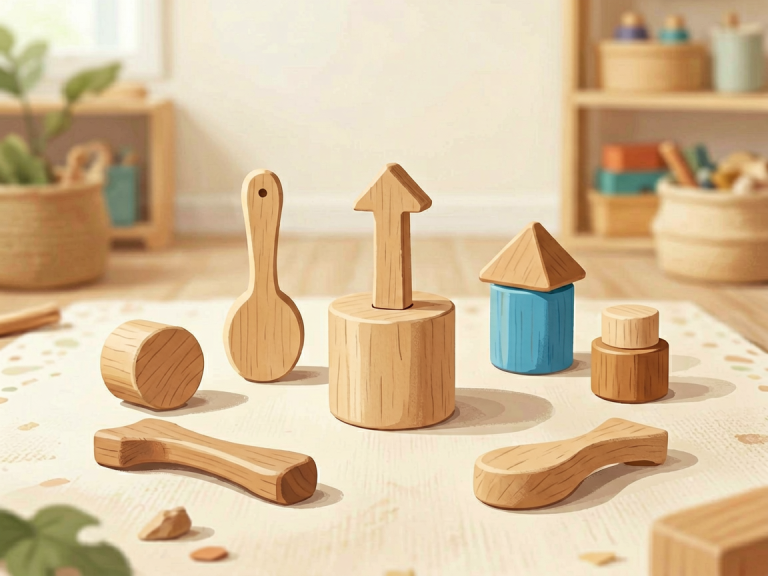
Recommended imaginative toys: Wooden blocks (unit blocks or large hollow blocks are excellent), train tracks with simple configurations, animal figurines, magnet tiles (for building structures), and art supplies like finger paints, stickers, and glue sticks. These materials allow children to construct their own worlds. A set of plain wooden blocks can become a castle, a parking garage, a zoo, or a birthday cake. Art supplies encourage self-expression and fine motor practice simultaneously. Additionally, a small stage or puppet theater (even just a blanket draped over two chairs) can turn storytelling into a performance. Encourage the child to tell you about their creation—this builds vocabulary and narrative skills.
Sensory Play and Calming Toys: Supporting Self-Regulation
Three-year-olds experience intense emotions and often lack the vocabulary to express frustration, excitement, or fatigue. Sensory play can be incredibly grounding. Toy progression should include options that help a child regulate their own nervous system, especially during transitions or moments of overstimulation.
Recommended sensory toys: A sand and water table (with scoops, cups, and sieves), kinetic sand, rice bins with small scoops and hidden treasures, textured balls or fidget toys (like squishy stress balls), and simple musical instruments (shakers, drums, xylophones). These toys provide a calming, repetitive motion that can soothe an anxious child. They also support scientific exploration (e.g., “Does this ball sink or float?”). A weighted lap pad or a small beanbag chair can offer proprioceptive input, which helps children feel centered. Introduce these toys during quiet times of the day, not right before bed, to avoid over-arousal.
Choosing Safe and Age-Appropriate Toys: Practical Considerations
When selecting toys for three-year-olds, safety is paramount. At this age, children are still prone to putting small objects in their mouths, so avoid any toy with small parts that can be a choking hazard. Look for labels that indicate “for ages 3+” or “not for children under 3.” Also consider durability: three-year-olds are not gentle. Wooden toys, high-quality plastic, and tightly stitched fabric items tend to last longer. Avoid toys with sharp edges, long cords, or toxic paints. Batteries should be securely enclosed. Additionally, choose toys that are easy to clean—playdough crumbs and paint splatters are inevitable.
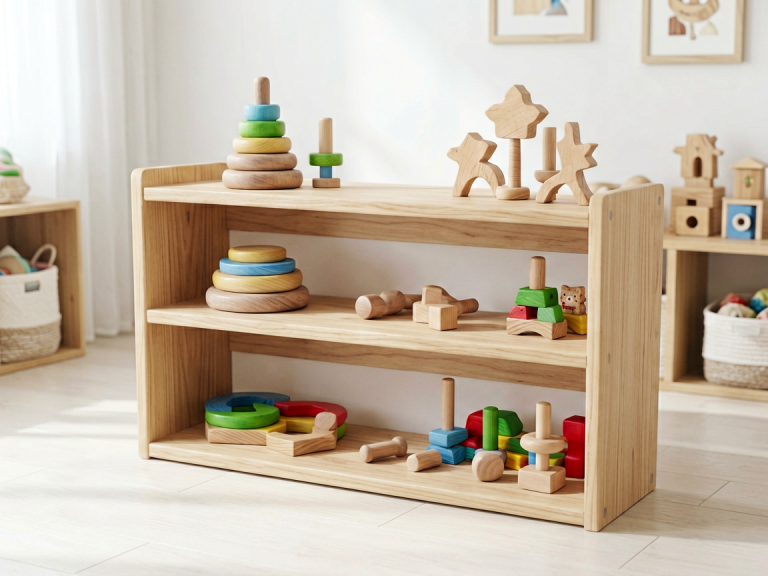
Another key principle of toy progression is rotation. Rather than overwhelming a child with dozens of toys, select 8 to 10 items that target different skills and rotate them every two or three weeks. This keeps the child’s interest fresh and prevents overstimulation. A well-chosen rotation also allows you to observe which types of play the child gravitates toward, giving you insight into their learning preferences.
Conclusion: Play as the Curriculum
Toy progression for three-year-olds is not about buying the newest, shiniest, or most expensive items. It is about thoughtfully matching playthings to the child’s developmental trajectory, offering just enough challenge to spark growth without causing frustration. Blocks, puzzles, pretend play sets, and sensory materials are the building blocks of a rich childhood. As you watch a three-year-old laboriously stack a tower, negotiate who gets the red car, or announce “I’m a dinosaur!” while wearing a cardboard tail, remember that each moment is a lesson in physics, social studies, and language arts rolled into one. The best toy is one that invites interaction—with the material, with other children, and with caring adults. So put down the screen, gather a few simple treasures, and let the progression unfold naturally. The child’s imagination will do the rest.