Play-Based Learning: Unlocking the Full Potential of Childhood Development
Introduction: The Forgotten Language of Childhood
In an era dominated by standardized testing, academic pressure, and screen time, the simple act of play has been increasingly marginalized in early childhood education. Parents enroll their toddlers in phonics classes before they can tie their shoes, and preschools advertise "academic rigor" as if preparing for college applications begins at age three. Yet a growing body of research in neuroscience, developmental psychology, and education tells a different story: the most effective way for young children to learn is not through worksheets or direct instruction, but through play. Play-based learning is not a luxury or a break from "real" education; it is the engine of cognitive, social, emotional, and physical development. This article explores what play-based learning truly means, why it works, and how parents and educators can implement it effectively to nurture curious, capable, and resilient children.
What Is Play-Based Learning? Defining the Core Concept
Play-based learning is an educational approach that uses children's natural inclination to play as the primary vehicle for acquiring knowledge and skills. Unlike unstructured free time, play-based learning is intentional and guided, though not necessarily adult-directed. The key is that the child remains an active agent—choosing, exploring, experimenting, and making meaning from their experiences. The educator or parent designs an environment rich with open-ended materials, opportunities for social interaction, and time for sustained engagement. Within this framework, children build literacy skills by inventing stories during pretend play, develop mathematical thinking by sorting blocks or measuring sand, and strengthen social-emotional competencies by negotiating roles in a group game.
The distinction between play-based learning and traditional academic instruction is fundamental. In a traditional classroom, the teacher transmits information and the child receives it passively. In a play-based setting, the child constructs knowledge actively. For example, a child stacking wooden blocks is not just "playing" but experimenting with gravity, balance, spatial relationships, and cause and effect. If a tower falls, the child learns resilience, problem-solving, and the need for a wider base. These lessons are far more deeply encoded than any worksheet on "balance" could achieve because they are embodied, emotional, and self-directed.
The Science Behind Play: Why It Works
Brain Development and Neural Connectivity
Neuroscientific research has revolutionized our understanding of play. During early childhood, the brain is extraordinarily plastic, forming up to one million new neural connections every second. Play directly stimulates this process. When a child engages in pretend play—pretending a cardboard box is a spaceship—multiple regions of the brain activate simultaneously: language centers process dialogue, motor cortex coordinates movement, prefrontal cortex plans the narrative, and limbic system regulates emotion. This cross-wiring strengthens neural pathways and creates a more integrated, flexible brain.
Moreover, play triggers the release of brain-derived neurotrophic factor (BDNF), a protein that supports the survival of existing neurons and encourages the growth of new ones. High BDNF levels are associated with enhanced learning, memory, and mood. Conversely, chronic stress—often induced by overly academic, pressure-filled environments—releases cortisol, which can inhibit neural growth and impair executive functions. Play-based learning, by its very nature, is low-stress and high-engagement, creating an optimal biochemical environment for learning.
Executive Function Skills: The Hidden Curriculum
One of the most powerful outcomes of play-based learning is the development of executive function skills: working memory, cognitive flexibility, and inhibitory control. These skills are better predictors of academic and life success than IQ or early reading ability. Consider a group of children playing "restaurant." They must remember who ordered what (working memory), adjust their role if another child changes the scenario (cognitive flexibility), and resist the urge to grab a toy because it belongs to the "customer" (inhibitory control). Every negotiation, rule-making, and conflict resolution during play is a live exercise in executive function.
Research by developmental psychologist Elena Bodrova and others has shown that mature, sociodramatic play—play with rules, roles, and scenarios—directly correlates with stronger self-regulation. In contrast, children who spend more time in adult-directed, passive learning activities often show weaker executive function because they have fewer opportunities to practice self-directed decision-making.
Implementing Play-Based Learning: Practical Strategies
Creating the Right Environment
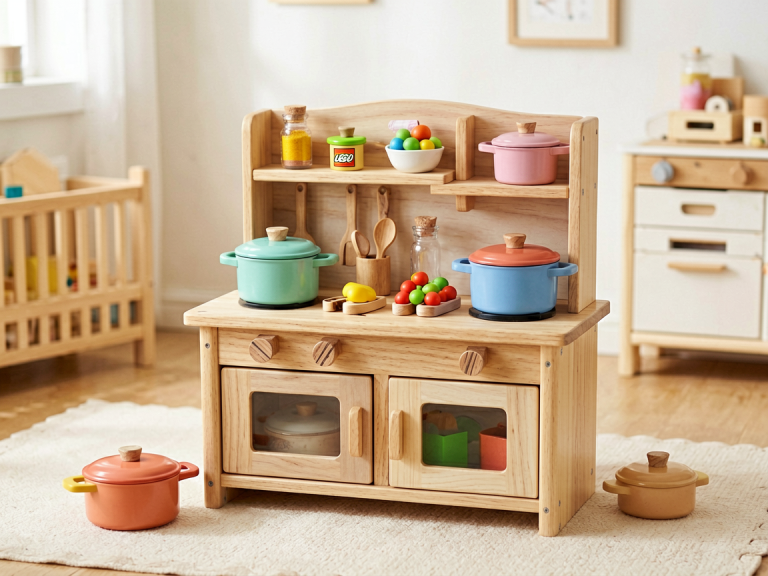
The physical environment is the "third teacher" in play-based learning. It should be rich, varied, and open-ended. Instead of toys that dictate a single use (like an electronic toy that only beeps when a button is pressed), provide loose parts: blocks, fabric scraps, cardboard tubes, natural objects like pinecones and stones, art supplies, and dress-up clothes. These materials invite multiple interpretations and sustain long-term engagement. A permanent fort-building corner, a sensory table with sand or water, and a designated dramatic play area with kitchen utensils, dolls, and tool kits can spark hours of imaginative exploration.
Equally important is the schedule. Children need extended, uninterrupted blocks of time—at least 45 to 60 minutes—to enter a state of deep play. Rushed transitions and frequent interruptions fragment their focus and prevent the rich narrative development that characterizes high-quality play. In many schools, this means resisting the temptation to fill every moment with structured activities.
The Role of the Adult: Facilitator, Not Director
Many adults struggle with play-based learning because they feel they must "teach" something. In reality, the adult's role is to observe, document, and scaffold without taking over. A skilled facilitator might sit near a child building with blocks and ask open-ended questions: "What happens if you try a larger block here?" or "How can you make your tower taller without it falling?" These prompts extend thinking without imposing a predetermined outcome.
The adult also serves as a safety net for social learning. When two children argue over a toy, the facilitator does not simply give a verdict but instead helps them articulate their feelings and generate solutions: "You both want the red car. What could we do so that everyone gets a turn?" This process, called "mediation," builds emotional vocabulary and conflict resolution skills. The goal is not to avoid conflict but to use it as a learning opportunity.
Balancing Child-Initiated and Adult-Guided Play
A common misconception is that play-based learning means the adult never intervenes. In fact, a balance is essential. Child-initiated play gives children autonomy and intrinsic motivation, but adult-guided play can intentionally introduce concepts. For example, after children have been playing "grocery store" for several days, the teacher might introduce a scale for weighing pretend produce, thereby embedding measurement and comparison into the play. This is not a drill—it is a natural extension that respects the child's interest while adding cognitive challenge.
Addressing Common Concerns and Challenges
"Will My Child Fall Behind Academically?"
This is the most frequent worry among parents. Yet longitudinal studies consistently show that children who experience high-quality play-based preschools outperform their peers from direct-instruction programs in the long run—not just in social skills but in reading and math by third grade. Why? Because play-based learning builds the foundational skills—curiosity, persistence, self-regulation, and problem-solving—that underlie all later academic work. A child who learns to love learning through play will approach letters and numbers with enthusiasm rather than resistance.
Practical Barriers: Time, Space, and Cultural Pressure
Implementing play-based learning is not always easy. Many parents feel pressure from relatives or school systems that emphasize early literacy benchmarks. The solution is not to abandon play but to reframe it. When a grandparent asks, "Doesn't he ever do real work?" you can explain that building with LEGO is engineering, and pretending to be a vet is biology and empathy. Advocate for your child's right to play by sharing research and examples. If you are an educator, lobby for assessment systems that value process over product and that measure growth in executive function, creativity, and collaboration.
Conclusion: Reclaiming Play as the Heart of Learning
Play-based learning is not a passing educational trend; it is a return to what we have always known intuitively about childhood. Children are not empty vessels waiting to be filled with facts. They are active meaning-makers, and play is their natural language. By honoring that language—by giving them time, space, materials, and trusting relationships—we do not just prepare them for school; we prepare them for life. We raise children who think critically, collaborate compassionately, and persist in the face of challenge. In a world that increasingly demands creativity and adaptability, play-based learning is not a soft option. It is the most rigorous, evidence-based, and humane way to nurture the full potential of every child. Let us commit to protecting and promoting play—not as a break from learning, but as learning itself.